Punjab and Haryana HC Slams Illegal Mining in Aravallis as Environmental 'Loot and Plunder'
The Punjab and Haryana High Court has delivered a scathing indictment of illegal mining activities in the Aravalli region, describing the situation as a scene of environmental "loot and plunder" and raising serious concerns about possible connivance by officials. In a strongly worded interim order, the court has taken decisive action to address what it terms a blatant violation of environmental norms.
Court's Stern Observations on Ecological Destruction
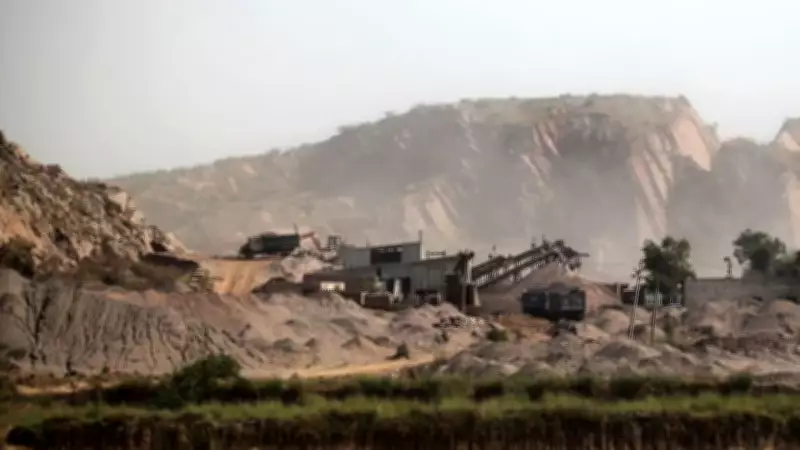
A Division Bench comprising Justices Ashwani Kumar Mishra and Rohit Kapoor expressed grave dismay at the extensive damage witnessed at a stone mining site in Pichopa Kalan village, located in Haryana's Charkhi Dadri district. The bench noted with alarm that hillocks that once existed on the land have completely vanished, leaving behind massive pits that testify to uncontrolled excavation.
The court's observations came during proceedings on a writ petition filed by residents of Pichopa Kalan, including the operator of Dharampal Stone Crusher. The petitioners alleged that private lessee Jai Dada Dohla Stone Mines had carried out indiscriminate mining far beyond the approved 11-hectare area in Khasra Nos. 109 and 110, resulting in substantial ecological devastation.

Evidence of Widespread Violations
After initial reports from mining officials proved insufficient, the court appointed Advocate Kanwal Goyal as local commissioner to conduct a thorough investigation. The commissioner's report, submitted following a site visit in December 2025, confirmed the petitioners' allegations with disturbing clarity.
- The commissioner found that only six of the nine required boundary pillars were present, with pillars C, D and E missing entirely.
- Mining activities extended far beyond the approved mining site, indicating systematic disregard for legal boundaries.
- A deep central pit, filled with rainwater, was visible to a depth of 47 meters before water obscured further view.
Systematic Failure of Environmental Safeguards
The court noted that the area, recorded in revenue documents as "gair mumkin pahar" (uncultivable hill), falls within the ecologically sensitive Aravalli range. Despite environmental clearance conditions mandating specific protective measures, almost none had been implemented:
- Year-wise plantation of 600 trees (totaling at least 6,000 over ten years) had not occurred.
- Green belt development requirements were ignored.
- Bench formation protocols were not followed.
- Mining restrictions to three meters above the groundwater table were violated.
The bench observed: "What is seen with the naked eye is not only disturbing but is also bewildering. It prima facie appears to be a case of blatant violation of environmental norms contained in the Environmental Clearance Certificate as well as the mining plan, causing loot and plunder of natural resources."
Suspected Official Connivance and Inaction
Perhaps most damning were the court's remarks about possible official involvement. The judges highlighted "the callousness on the part of the State authorities in discharge of their duties" and stated they could not rule out "connivance on the part of the responsible officers."
Evidence presented to the court revealed that a communication from the Mining Officer dated October 1, 2025, had recommended terminating the lease due to accidents, unsafe practices, and geotechnical instability. However, no action was taken by the Director General of Mines and Geology, raising questions about administrative accountability.
Another troubling revelation involved the complete disappearance of a metalled link road from Pichopa to Sishwala, constructed between 2012-13 and strengthened in 2021 using public funds. While RTI documents proved the road's existence, mining officials claimed no such road was recorded, suggesting deliberate obfuscation.
Court's Stringent Directions
In response to these findings, the High Court issued several stringent directions:

- Haryana's chief secretary must file a personal affidavit explaining how the state proposes to deal with the "vast extent of environmental plundering" and fix responsibility for erring officials.
- The Union Ministry of Environment, Forest and Climate Change has been impleaded, with its secretary directed to suggest remedial measures.
- The director of the Haryana Space Applications Centre must provide year-wise satellite imagery of the site from 2016 onwards.
- Charkhi Dadri's deputy commissioner has been ordered to seal the entire mining area within 48 hours and videograph the process.
The court expressed skepticism about a mine closure order dated December 11, 2025, calling it prima facie "nothing but a cover-up." The matter has been listed for further hearing on February 25, with the bench keeping open the possibility of referring the case to an independent agency if unsatisfied with Haryana's response.
Concluding their observations, the judges stated: "The mechanism contemplated to contain destruction and damage to the environment has prima facie failed to check the menace." This case represents a significant judicial intervention in environmental protection, highlighting the ongoing struggle to preserve India's fragile ecosystems against illegal exploitation.