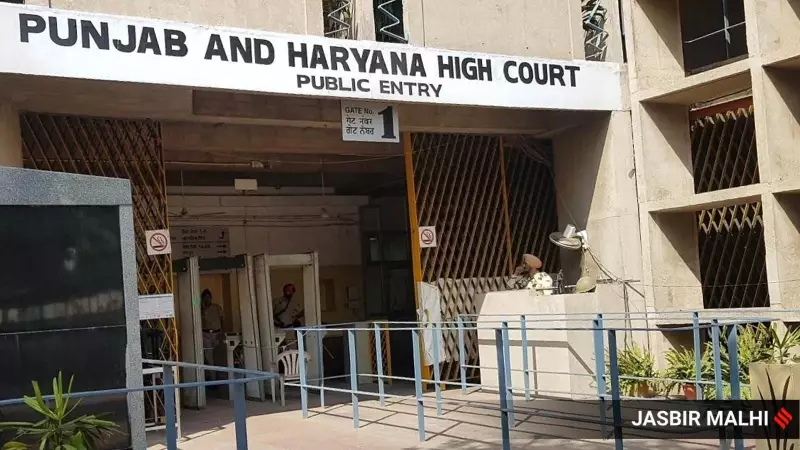
In a significant ruling that underscores the principle of just compensation, the Punjab and Haryana High Court has enhanced the payout for a bus conductor who suffered permanent disability in a 2006 road accident by nearly six times. The court held that the original award of Rs 1 lakh was "grossly meagre" and failed to account for the severity of his injuries, delivering justice nearly two decades after the incident.
A Long Road to Justice: The 2006 Accident
The case revolves around Ram Singh, a bus conductor, who met with a life-altering accident in the early hours of November 27, 2006. Around 3:30 am, the bus he was travelling in, which was carrying plastic waste from Sirsa to Bhiwani, lost control near Chikanwas village in Haryana's Bhiwani district. Justice Harkesh Manuja noted that a mule suddenly came onto the road, and the driver was momentarily blinded by the headlights of an oncoming vehicle. This caused the bus to first hit the animal, then crash into a roadside tree and overturn.
Ram Singh sustained serious injuries that resulted in a 40% permanent disability, primarily affecting his right foot. He was hospitalised for nearly a month, required readmission later, and was left with lasting physical damage.
Court's Rationale for Major Compensation Enhancement
The Bhiwani Motor Accident Claims Tribunal had earlier held the driver negligent and awarded Rs 1 lakh with 7.5% annual interest. The High Court, however, found this amount wholly disproportionate. Setting aside the tribunal's award, Justice Manuja recalculated the compensation, fixing the total at Rs 5,91,500 along with a higher interest rate.
A key legal hurdle was the nature of the claim. Since the accident did not involve a collision with another vehicle, it couldn't be strictly treated as a no-fault claim. However, the court exercised its powers to treat it as a fault-based claim, asserting that victims cannot be denied fair compensation due to technicalities in how the claim was filed.
Realistic Assessment of Losses
The judgment made several critical observations for future accident claims:
Medical Expenses: The court acknowledged that victims cannot be expected to preserve every bill. Despite documented bills of only Rs 45,800, it reasonably assessed medical expenses at Rs 1.5 lakh, considering the injury's nature and hospitalisation period.
Loss of Income: The tribunal had rejected this claim due to a lack of documentary proof of earnings. Relying on Supreme Court precedents, the High Court held that notional income must be assessed realistically, especially for unorganised sector workers. It fixed Ram Singh's notional income at Rs 3,000 per month, considering he was 45 at the time and unable to work for months.
Taking his functional disability at 35% and adding future prospects, the court calculated Rs 2,20,500 for future loss of earnings. It also awarded Rs 1 lakh each for pain and suffering, and for special diet, conveyance, and attendant charges.
Final Award and Implications
The final enhanced compensation stands at Rs 5,91,500—an increase of Rs 4,91,500 over the original award. The court also raised the interest rate to 9% per annum from the claim's filing date. It directed that if the amount is not paid within three months, it will thereafter attract interest at 12% per annum.
This ruling sends a strong message that compensation must reflect the actual suffering and loss of accident victims, and token payouts are unacceptable. It emphasises a victim-centric approach, particularly for those from the unorganised sector who may lack extensive documentation.