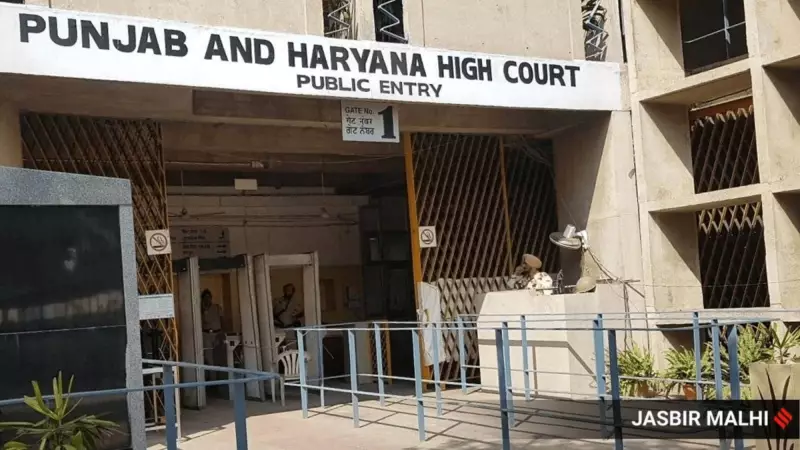
In a landmark judgment providing relief to families of deceased government employees, the Punjab and Haryana High Court has granted pension benefits to a mother, 14 years after her unmarried son, a Sanskrit teacher, passed away while in service. The court ruled that a wife's nomination by her husband for his family pension does not automatically disqualify her from claiming financial assistance following the death of her son.
Court Overturns Lower Courts' Decision
Justice Pankaj Jain, while pronouncing the judgment on December 22 in case RSA-4194-2017, set aside the rulings of both the trial court and the lower appellate court. The lower courts had dismissed the suit filed by the mother, Kalawati, on grounds of suppression of facts and lack of dependency.
Kalawati's son, Hari Har Mohan, was an unmarried Sanskrit teacher posted at the Government Middle School in Sanghore, Kurukshetra. He died on October 11, 2011, while drawing a monthly salary of Rs 38,570. Kalawati had claimed she was wholly dependent on him and sought financial assistance equivalent to his last drawn salary until his date of superannuation, followed by a family pension.

The Haryana Government contested her claim, pointing out that Kalawati's husband, Sat Narain Shastri, a retired government employee, was receiving a monthly pension of Rs 15,475 and had nominated her for family pension after his death. The lower courts agreed with the state, holding that this pension disqualified her from being considered wholly dependent on her son.
High Court's Rationale and Legal Interpretation
Justice Jain, however, held that the lower courts erred in their approach. The judge observed that merely because Kalawati failed to disclose her husband's pension in the plaint, it would not disentitle her from maintaining her claim. "Admittedly, she has no independent source of income," the court noted.
The court emphasized that eligibility under the Haryana Compassionate Assistance to the Dependents of Deceased Government Employees Rules, 2006 is governed by the Family Pension Scheme, 1964. This scheme expressly includes parents of an unmarried deceased employee in the definition of "family."
Rule 3 of the 2006 Rules clearly states: "The eligibility to receive financial assistance under these rules shall be as per the provision in the pension/family pension scheme, 1964."
Precedent Against Discriminatory Denial
Relying on a division bench judgment in Kartar Kaur and anr vs Union of India and ors (2011), the court noted that denying a family pension to a mother simply because her husband receives a pension is discriminatory. Justice Jain quoted the earlier ruling, which stated that a wife cannot be denied the benefit of an ordinary family pension just because her husband gets a "meagre amount of pension as a matter of right."
"Merely for the reason she has been nominated by her husband to receive family pension in the event of his death would not disentitle her from claiming financial benefits under 2006 Rules qua death of her unmarried son," Justice Jain concluded.
The court allowed Kalawati's appeal and directed the Haryana Government to release the due benefits under the 2006 Rules. The state has been ordered to pay arrears with 6 per cent interest from the date the amount accrued. The court further ruled that if the payment is delayed beyond three months from the date of the judgment, the interest rate will rise to 9 per cent per annum.
This judgment reinforces the protective intent of family pension schemes for dependent parents and clarifies that benefits from one relationship do not extinguish rightful claims arising from another.