Goa Police Intensify Crackdown on Social Media Content Deemed Disruptive to Public Harmony
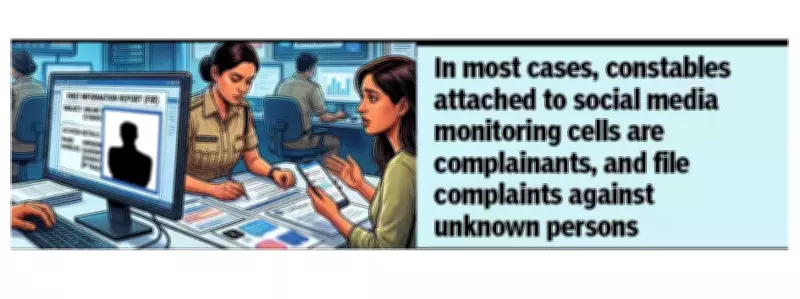
In a significant move to maintain public order, the Goa police have registered several suo motu First Information Reports (FIRs) against individuals who post what authorities describe as "objectionable statements," "indecent comments" about women, or other content that could potentially "disturb public peace and harmony." This proactive approach targets a wide range of online activities, from satirical political reels to controversial yoga workshops, with police constables from the social media monitoring cell acting as complainants in these cases.
Targeting Unidentified Individuals Across Various Platforms
The FIRs have primarily been filed against unidentified persons, reflecting the challenges of tracking online anonymity. Police constables attached to the dedicated social media monitoring cell are spearheading these complaints, scrutinizing content that spans from yoga workshops to memes and reels critical of politicians and political parties. This initiative underscores the police's commitment to preemptively address content they believe could incite unrest or mislead the public.
Specific Cases Highlighting the Crackdown
In one notable instance, an FIR was filed against an unidentified individual for posting a reel on Facebook. This content featured edited visuals of traditional folk performers presented in a dramatized and satirical manner. It also included portrayals of the Chief Minister in connection with recently controversial development projects, such as the Unity Mall and Prashasan Stambh, which were ultimately scrapped by the government. Constable Shivanand Naik Vernekar, in his complaint, asserted that "the content was alleged to be misleading in nature, aimed at creating distrust against the government, and likely to disturb public peace and harmony within the state."

Another case involved Constable Suraj Shirodkar, who reported that an unidentified person created and circulated a fake, manipulated, and AI-generated video titled 'Dabolim files.' This video contained false information regarding the closure of Dabolim airport. Shirodkar emphasized that this was intended to "misinform the public, create confusion, damage the reputation of public authorities, incite distrust in governance, and disturb public peace and order" within Goa.
Addressing Abusive and Inflammatory Statements
Further complaints detail actions against unidentified persons for making abusive, obscene, and objectionable statements against political parties. Additionally, an individual was cited for making indecent remarks towards a woman and passing inflammatory statements related to the 'Viva Portugal' issue. This controversy saw sections of society, including freedom fighters, opposing Goans chanting 'Viva Portugal,' while others defended the practice as harmless.
Constable Vernekar, in his complaint, described these statements as "lascivious and prurient, could induce individuals or the community to commit an offence against public tranquility and create disharmony," leading to the registration of an FIR based on these grounds.
Controversial Case Involving a French National
A French national recently found himself at the center of this crackdown when an FIR was registered against him for organizing a yoga workshop at Arambol. He has since approached the high court seeking to quash the FIR. Constable Chandan Gaonkar, in his complaint, argued that "the said reel contains sexually suggestive and explicit narratives relating to sexuality and intimacy, projected as spiritual or healing practices and publicly accessible, and offensive to public decency, thereby misleading the public, affecting social harmony, public order and distorting the image of Goa and its tourism at national and international level."

Legal Challenges and Criticisms
Advocate Siddharth Sardesai, representing the French national, criticized the police action as not only harassment but also a directionless investigation. He pointed out that his client's workshop details, posted on social media and viewed by 600,000 people, did not elicit a single public complaint. Sardesai stated, "However, a police constable interpreted the post the way he wanted and filed a complaint against my client. This is the understanding of a constable about Section 67A of the IT Act," highlighting potential overreach or misinterpretation in applying legal provisions.
This series of FIRs reflects Goa police's intensified efforts to monitor and regulate social media content, balancing concerns over public order with questions about freedom of expression and the scope of police interpretation in digital spaces.