Five Men Sentenced to Five Years in 2016 Una Flogging Case Under SC/ST Act
In a significant verdict, a special court in Gujarat on Tuesday sentenced five men to five years of rigorous imprisonment for their involvement in the horrific 2016 Una flogging case. The sentencing was delivered under the Scheduled Castes and Scheduled Tribes (Prevention of Atrocities) Act, 1989, marking a crucial development in the long-pending case that had sparked nationwide outrage.
Court Acquits 35 Accused Including Police Officials
Special Judge J J Pandya, presiding over the atrocity court in Veraval, acquitted 35 other accused individuals in the same case. This group included four police officials who faced allegations of negligence and failure to act promptly during the incident. The court determined that the prosecution had failed to substantiate charges against these individuals with sufficient evidence.
The court specifically rejected the charge of attempted murder, noting that while the accused were numerous and armed with weapons like iron pipes and wooden sticks, the prosecution could not prove that the injuries inflicted were severe enough to cause death. The judgment stated that if the attackers had truly intended to kill the victims, they possessed both the numbers and means to do so.
Details of the Convicted Individuals
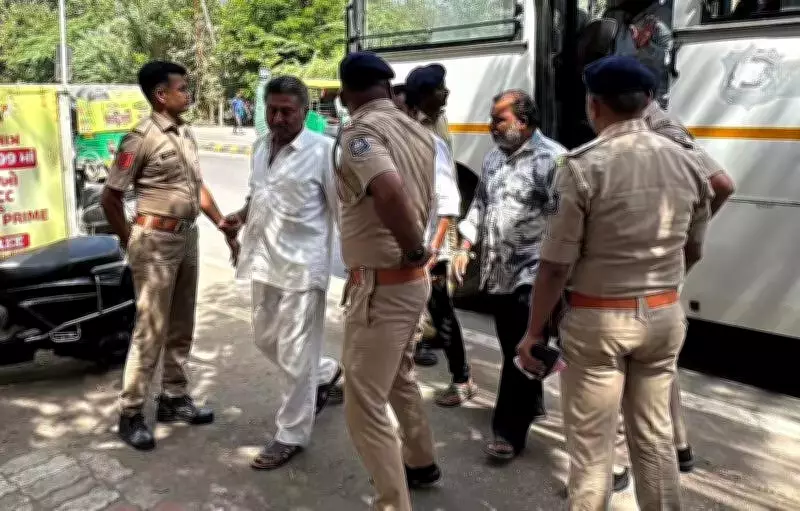
The five convicted men are Ramesh Bhagwan Jadav, Rakesh Rasik Joshi, Nagji Dahya, Pramodgiri Rameshgiri Gauswami, and Balvantgiri alias Bali Gauswami. According to District Government Pleader Ketansinh Vala, all five have already spent more than five years in jail as undertrial prisoners. Consequently, they will not face additional incarceration despite the sentencing.
The convictions were secured under multiple sections of the Indian Penal Code: Section 323 for voluntarily causing hurt, Section 324 for causing hurt with dangerous weapons, Section 342 for wrongful confinement, and Section 504 for intentional insult with intent to provoke breach of peace.
The Horrific Incident of July 11, 2016
The atrocity unfolded on the morning of July 11, 2016, near a quarry in Mota Samadhiyala village of Una Taluka. The victims—Balu Sarvaiya, his sons Vashram and Ramesh, along with relatives Ashok and Becharbhai—were engaged in their traditional occupation of skinning a dead cow when a mob of self-styled cow vigilantes arrived at the scene.
Despite the victims' desperate pleas that the animal was already dead and that skinning carcasses represented their family's traditional livelihood, the mob falsely accused them of slaughtering live cows. The attackers then proceeded to assault the Dalit family members using iron pipes, wooden sticks, and belts. When female family members including Kunvarben attempted to intervene, they too were brutally beaten and subjected to vicious casteist slurs.
The violence escalated as the attackers forced the half-naked victims into their vehicles, tied them to the backs of cars with ropes, and paraded them toward Una town. The victims were publicly beaten near the bus stand before being brought to the local police station.
Evidentiary Challenges and Witness Testimony
The prosecution faced significant challenges during the trial, particularly regarding witness testimony. Dozens of shopkeepers from Una who had establishments along the route where victims were paraded failed to support the prosecution's case. While some acknowledged seeing four people tied behind a vehicle, they claimed not to have witnessed any beating, abuse, or casteist slurs being hurled.
Only one witness testified before the court that he could identify Pramodgiri as one of the individuals beating the victims. The prosecution also heavily criticized the role of local police, highlighting their apparent negligence and failure to act in time, though this could not be conclusively proved during trial proceedings.
Court's Critical Observations About Victims
In a controversial portion of the judgment, the court came down heavily on the victims while examining provisions for compensation under BNSS Section 395. The court observed that the objective of compensation laws is victim rehabilitation and must be applied after assessing the social and economic status of victims as well as their conduct.
The judgment pointed to several contradictions in the statements and actions of the complainant and his family. It noted that while medical records indicated no life-threatening injuries, the victims had described their condition as critical. The court observed that despite recovery, the victims appeared to have deliberately sought hospital admissions and projected their condition as serious, including through media channels.
According to the charge sheet, the incident triggered widespread unrest within the Dalit community, leading 23 individuals to attempt suicide by consuming poison, with one fatality. The court noted that due to the complainant's conduct, sensitive members of the Dalit community were driven to take extreme steps, resulting in loss of life and immense grief.
Unique Compensation: Gandhi's Autobiography
In an unusual directive, the court ordered that a copy of Satya Na Prayogo (My Experiments With Truth), the autobiography of Mahatma Gandhi, be provided to the complainant and victims as part of compensation. The Veraval District Legal Services Authority has been directed to implement this order.
The court observed that to improve the overall condition of the complainant and victims, and to help them cope with mental trauma and face injustice within the framework of law, the thoughts of Mahatma Gandhi remain relevant today. The judgment noted that even if the conduct of the complainant and victims is viewed with leniency, financial compensation can offer only temporary relief and cannot bring about lasting improvement.
The government has already paid Rs 3 lakh to each victim, while political parties and organizations have collectively extended Rs 21 lakh. Despite this financial assistance, the complainant and victims have continued to endure significant physical and psychological distress according to court observations.
Broader Impact and Viral Footage
The perpetrators had recorded the assault on their mobile phones, and the videos quickly went viral across social media platforms. The disturbing visuals of the flogging triggered massive protests across Gujarat and throughout the entire country, bringing national attention to issues of caste-based violence and cow vigilantism.
The court noted that around 74 other offences linked to the incident were also reported, indicating the widespread impact of the case. The judgment represents a complex resolution to a case that has remained emblematic of caste-based atrocities in India for nearly eight years.