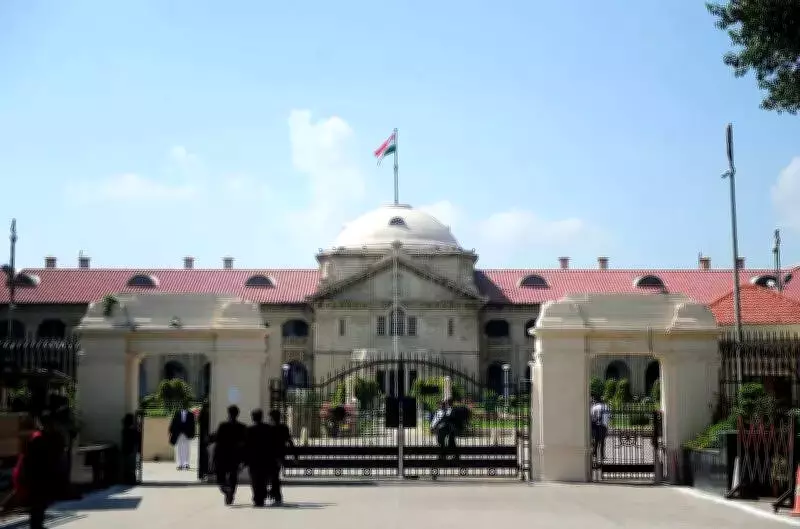
Allahabad High Court Announces Landmark Hindi Translation Initiative for Judgments
The historic Allahabad High Court commemorated its 160th establishment anniversary with a significant announcement aimed at democratizing access to justice. In a move designed to bridge the linguistic divide, the court declared that all non-AFR (Automatic Free Registration) final judgments and orders from both its Allahabad and Lucknow benches will be systematically translated into Hindi.
This groundbreaking initiative is scheduled to take effect from March 17, 2026, marking a pivotal step towards greater judicial transparency and public comprehension. The translated documents will be made available on the court's official website, ensuring widespread digital access.
Enhancing Public Understanding in a Diverse State
The primary objective of this ambitious translation project is to make complex legal rulings more understandable and accessible to the general populace. This is particularly crucial in Uttar Pradesh, a linguistically diverse state where Hindi is the predominant language of communication for millions of citizens.
By providing official Hindi versions of judgments, the court aims to demystify legal proceedings and outcomes, fostering a more informed and engaged public. This initiative is expected to empower individuals who may not be proficient in English, the traditional language of higher judiciary records, to better understand the legal principles and decisions that affect their lives.
Historical Context and Implementation Framework
The Allahabad High Court, originally established on March 17, 1866, has a rich legacy spanning over a century and a half. This new translation directive represents a modern evolution of its service to the people of Uttar Pradesh and beyond.
The execution of this large-scale project has been entrusted to the specialized SUVAS Cells located in Allahabad and Lucknow. These units will operate under the direct patronage of the Honorable Chief Justice and will follow the strategic guidance of a multi-faceted advisory structure.
The translation process will be supported by an AI-assisted legal translation advisory system, ensuring accuracy and consistency in converting complex legal terminology. Furthermore, the project will be overseen by the e-AHCR (Electronic Allahabad High Court Reports) and ILR (Indian Law Reports) committees, guaranteeing that the translations meet the highest standards of legal documentation.
This comprehensive approach combines technological innovation with expert human oversight to create reliable, authoritative Hindi versions of judicial pronouncements.
Broader Implications for Judicial Accessibility
Legal experts have hailed this decision as a progressive step towards making the judiciary more inclusive and responsive to the needs of India's diverse population. Translating judgments into Hindi addresses a long-standing gap between the formal language of the courts and the vernacular understanding of the people they serve.
The move is also seen as aligning with broader national efforts to promote regional languages in official domains, while maintaining the integrity and precision required in legal matters. As the implementation date of March 2026 approaches, the Allahabad High Court's initiative is likely to set a precedent for other high courts across India, potentially inspiring similar measures to enhance public access to justice nationwide.