
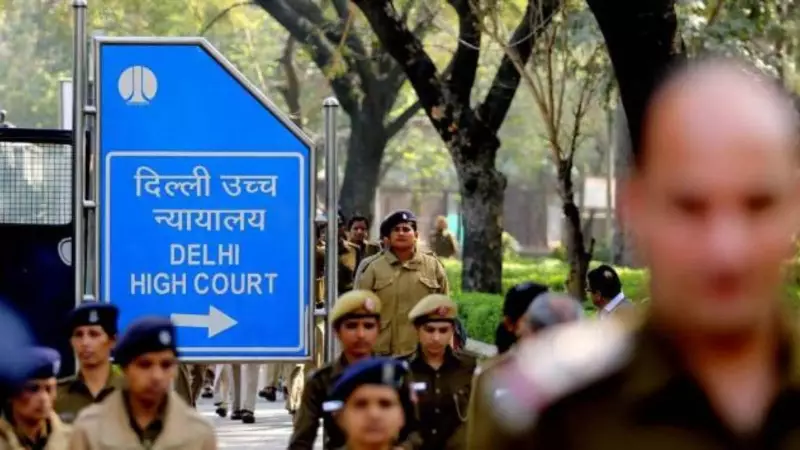
In a significant ruling, the Delhi High Court has dismissed an appeal filed by two Joint Entrance Examination (JEE) aspirants who alleged discrepancies in their 2025 response sheets. A division bench upheld a single judge's earlier decision but replaced a monetary penalty with a directive for the students to perform community service for one month.
Court Upholds Single Judge's Decision, Modifies Penalty
The division bench, comprising Chief Justice Devendra Kumar Upadhyaya and Justice Tushar Rao Gedela, was hearing an appeal against a September 22 order. The single judge had dismissed the aspirants' writ petition against the National Testing Agency (NTA), concluding that the response sheets they relied upon were not genuine. The judge had also imposed a cost of Rs 30,000 on each student.
However, the division bench, in its December 22 order, modified this penalty. Instead of the fine, it directed one appellant to perform community service at an old age home for one month, from May 15 to June 15, daily between 11 am and 1 pm. The other appellant was ordered to serve at a child care centre in Ghaziabad for the same duration.
Forensic Report and Legal Jurisdiction Key to Decision
The court's decision heavily relied on a forensic report from the National Cyber Forensic Laboratory (NFCL). The report revealed a critical flaw in the aspirants' case: crucial browser logs from the time of downloading the alleged scorecards were missing from their devices. This undermined the authenticity of their evidence.
The bench stated it found "no infirmity in the reasoning or conclusions arrived at by the single judge." It further elaborated that the students' claims were "mathematically inconsistent and contrary to established examination procedures." The judges emphasized that the issues raised pertained to "disputed questions of fact and allegations of manipulation", which cannot be adjudicated by a constitutional court under its writ jurisdiction.
Consequences for Aspirants and Future Implications
The court noted submissions from the NTA's counsel confirming that while the two aspirants are barred from appearing in the JEE examinations for 2025 and 2026, there is no restriction on them taking any other examinations. Importantly, the bench clarified that this debarment should not be treated as a stigma for their future academic pursuits.
The ruling also addressed the scope of legal challenge, concluding that the court did not find any provision to enlarge the scope of challenging an order framing charges under the NIA Act from supervisory jurisdiction to a challenge on facts and law.
This judgment underscores the judiciary's reliance on digital forensic evidence in cases alleging technical discrepancies and reiterates the boundaries of writ jurisdiction in examining complex factual disputes related to competitive examinations.