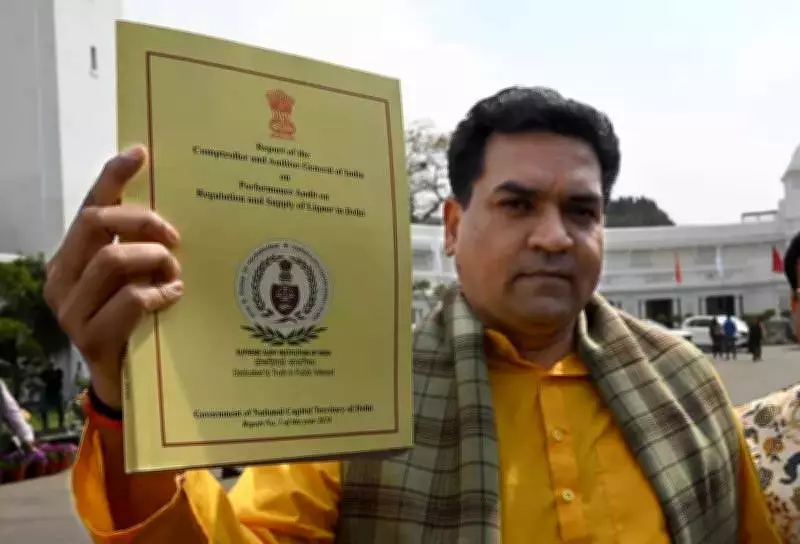
Delhi Court Dismisses Plea Seeking FIR Against BJP MLA Kapil Mishra in 2020 Riots Case
A court in New Delhi on Friday dismissed an application seeking registration of a First Information Report (FIR) against Bharatiya Janata Party (BJP) Member of Legislative Assembly Kapil Mishra for his alleged involvement in the 2020 northeast Delhi riots. Chief Judicial Magistrate Avinash Panwar ruled that the allegations raised by the complainant were legally untenable in light of earlier judicial findings that have attained finality.
Background of the Case and Complainant's Allegations
The plea was filed by Yamuna Vihar resident Mohammad Ilyas under Section 175(3) of the Bharatiya Nagarik Suraksha Sanhita (BNSS), which empowers a magistrate to direct registration of an FIR in cognizable offenses. Ilyas alleged that he witnessed Kapil Mishra participating in the violent riots that rocked northeast Delhi in February 2020.
Specifically, the complainant claimed that he saw Mishra and others blocking a road in Kardampuri and destroying vendors' carts during the violence. He further alleged that the then Delhi Police Deputy Commissioner of Police (DCP) was standing next to Mishra during these incidents, suggesting possible complicity or inaction by law enforcement authorities.

Court's Reasoning and Judicial Precedents
In his detailed order, Magistrate Avinash Panwar held that the submissions made by the complainant were "legally impermissible" in view of findings already laid down by a Central Bureau of Investigation (CBI) court in November 2025. The court emphasized that these findings were binding and had attained finality since they were not challenged before the Delhi High Court.
The court also referred to earlier proceedings in the same matter, where the magistrate court's predecessor, Additional Chief Judicial Magistrate Vaibhav Chaurasiya, had directed Delhi Police to investigate Mishra's alleged role in the riots. However, this order was subsequently set aside by the sessions court, whose observations Judge Panwar relied upon in his current decision.
Previous Judicial Observations and Controversies
In the earlier proceedings, Magistrate Vaibhav Chaurasiya had raised significant concerns about the adequacy of Kapil Mishra's police interrogation. He noted contradictions in Mishra's statements regarding the delivery of a speech that became central to the controversy surrounding the riots. Chaurasiya also observed that "guesswork" and interpretations went into building the prosecution's theory that the violence was a pre-planned conspiracy by anti-Citizenship Amendment Act protesters.
This order was challenged through two separate revision petitions—one filed by the state and another by Kapil Mishra himself. Both petitions were disposed of on November 11 last year when the sessions court set aside the directions for further investigation. The sessions court ruled that "to initiate legal action, the application should have clearly disclosed the commission of a cognizable offense" and that the magistrate court could not order further investigation since Delhi Police had already registered an FIR regarding the alleged larger conspiracy and the Karkardooma court had taken cognizance of it.
Broader Context of the 2020 Delhi Riots
The 2020 northeast Delhi riots were some of the worst communal violence the national capital has witnessed in decades. The violence erupted amid protests against the Citizenship Amendment Act (CAA), resulting in numerous deaths, injuries, and extensive property damage. The legal proceedings surrounding these events have been complex and multifaceted, involving multiple courts, investigations, and political figures.
Kapil Mishra, a prominent BJP leader from Delhi, has been a controversial figure in these events due to his inflammatory speeches and alleged involvement in inciting violence. However, he has consistently denied any wrongdoing and maintained that he was exercising his right to free speech within legal boundaries.

Implications of the Court's Decision
The dismissal of this plea represents another legal setback for those seeking to hold Kapil Mishra accountable through criminal proceedings for his alleged role in the 2020 riots. The court's reliance on binding judicial findings from earlier proceedings suggests that similar attempts may face significant legal hurdles unless new evidence emerges or higher courts intervene.
This decision also highlights the complex interplay between different levels of the judiciary in high-profile cases involving political figures. The fact that earlier orders were set aside by higher courts demonstrates the rigorous judicial scrutiny applied to such matters, even as victims and activists continue to seek justice for the violence that devastated northeast Delhi communities.
The legal landscape surrounding the 2020 Delhi riots remains contentious and evolving, with multiple cases still pending before various courts. This latest development adds another layer to the ongoing judicial examination of one of the most traumatic episodes in recent Delhi history.