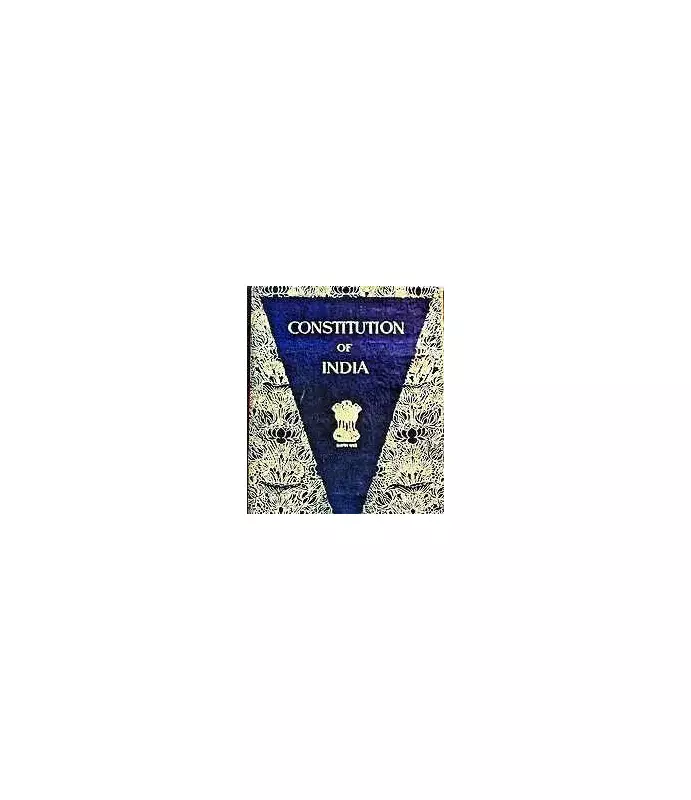
In a landmark achievement for linguistic diversity, the Constitution of India is now accessible in the Kashmiri language for the first time. This historic translation, a project spanning over two years, has been officially released and is hosted on the Union Ministry of Law and Justice's website.
A Watershed Moment for Kashmiri Language
President Droupadi Murmu formally unveiled the volume on November 27. The red-bound edition is adorned with traditional Chinar leaf motifs and Kashmiri decorative art. Leading the effort was Prof. Aejaz Mohammad Sheikh, Dean of the School of Arts, Languages and Literature at the University of Kashmir, who headed an 11-member expert panel.
Prof. Sheikh hailed the work as a "watershed moment." He stated, "You now have the Bible of law in Kashmiri. This is not just a transfer of knowledge. It enriches the language itself." He emphasized that the translation provides Kashmiri with the necessary legal and intellectual vocabulary to articulate complex ideas in science, law, and modern discourse, moving it beyond the realm of poetry and literature.

Rigorous Translation Process Ensured Accuracy
The ambitious project was initiated in August 2023 when the National Translation Mission (NTM) of the Central Institute of Indian Languages in Mysuru approached Prof. Sheikh. The professor, fluent in Kashmiri, Urdu, Hindi, and Sanskrit, assembled a multidisciplinary team from the university, including linguists, academics, legal experts, and officials from All India Radio (Srinagar) and the education department.
The team employed a meticulous process. Members first worked individually before convening to compare and refine drafts. This was followed by a series of intensive seven-day workshops. The first workshop was held in Mysuru, where legal experts read the English Constitution aloud while linguists cross-checked the Kashmiri versions. Every term was debated, and every phrase was tested until a consensus was reached.
After the fifth workshop, Prof. Sheikh conducted a final review. The draft was then placed online for a three-month public feedback period by the law ministry before the President's release. The final translation uses the standard Kashmiri Perso-Arabic script in a simpler, more accessible style.
Empowering the Common Kashmiri Speaker
The translation is seen as a tool for empowerment and linguistic pride. "A common Kashmiri can now read the Constitution in their own language," Prof. Sheikh noted. He believes it will change how students perceive their mother tongue, proving it has the grammatical and lexical strength for complex expression.
A government official echoed this, stating that incorporating constitutional and legal terminology strengthens Kashmiri's capacity to function as a language of governance. Linguistic experts have suggested introducing the text in schools and using voice-based software to ensure wider public reach.
This development follows the Jammu and Kashmir Languages Bill, 2020, approved by the Union Cabinet on September 2, 2020, which recognized Kashmiri, Dogri, Urdu, Hindi, and English as official languages of the Union Territory. Previously, before the revocation of Article 370, Urdu was the sole official language of the erstwhile state.