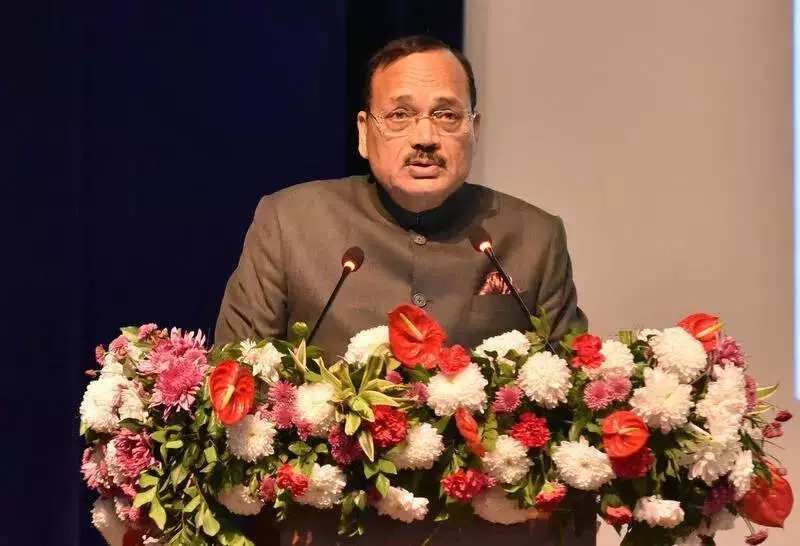
In a powerful address delivered in his hometown, the Chief Justice of India, Justice Surya Kant, issued a clarion call for a technological revolution within India's legal fraternity, especially for practitioners in smaller towns. Speaking in Hansi, Haryana, on Friday, the CJI emphasized that the rapidly globalizing nature of litigation demands lawyers move beyond traditional methods.
Democratizing Legal Practice with Technology
Justice Kant firmly stated that commercial litigation must not remain the exclusive domain of big-city lawyers. He challenged advocates in district and sub-divisional courts to equip themselves with technological proficiency to seize new opportunities. The CJI outlined essential modern skills, including online filing of cases, presenting virtual arguments, and handling digital evidence, which are becoming as crucial as conventional courtroom advocacy.
To bridge this gap, he advocated for structured training programs and the involvement of domain experts, with a special focus on mentoring the younger generation of lawyers. "With the latest technology, our lawyers can compete not just in local courts, but at a global level," Justice Kant remarked, highlighting the international scope of modern legal disputes.

India's Judicial Tech Leadership and Emerging Threats
The Chief Justice proudly noted India's position as a global leader in judicial technology. He asserted that the level of tech integration, from case filing to delivering judgments, is unmatched anywhere in the world. Several countries have already signed Memorandums of Understanding (MoUs) to adopt India's judicial technology systems.
However, he paired this achievement with a serious warning. While conventional crime is seeing a decline, cybercrime has emerged as a monumental threat. Justice Kant cited alarming reports indicating that over Rs 55,000 crore has been siphoned off from citizens, particularly senior citizens, through digital arrests and online fraud schemes.
A Personal Journey and Vision for Hansi
Reflecting on his own humble beginnings, Justice Surya Kant shared an inspiring anecdote from his early career. He started practice at the Hisar Bar in 1984 and, after being encouraged by a sessions judge, moved to the high court in Chandigarh with just four sets of clothes in a briefcase. "I was thrown into the ocean," he recalled. "I succeeded because I accepted the challenge." His message to young lawyers was clear: "Fear has no place where preparation is strong."
On a personal note, he fondly remembered watching his first Hindi movie in Hansi and described the town as a historic city with roots stretching from the era of the Mahabharata to Prithviraj Chauhan. Concluding his address, the CJI, who has served 22 years in the judiciary, thanked the Haryana government for declaring Hansi a district. He also stated he would request the Chief Justice of the Punjab and Haryana High Court to establish Hansi as a sessions division, potentially boosting its legal infrastructure.
Linking robust legal systems to economic prosperity, Justice Kant observed that foreign direct investment naturally flows to nations that offer legal certainty and an independent judiciary. He also stressed the importance of making justice accessible, suggesting that mediation processes should be conducted in local languages and dialects to build public confidence.