For a quarter of a century, the disappearance of two young men from Lucknow remained a cold case, drifting through India's vast criminal justice system. The breakthrough came not from a dramatic confession, but from a silent witness hanging in a village home: a simple brown coat. This garment finally unlocked the truth behind the abduction and murder of Manoj Kumar Singh and Ravi Srivastava, leading to the conviction of the notorious Raja Kolander and his accomplice.
The Fateful Journey and a Cold Trail
On the evening of January 24, 2000, 22-year-old Manoj Kumar Singh, son of Shiv Harsh Singh, left Lucknow in his Tata Sumo vehicle, driven by Ravi Srivastava. In a routine decision, they picked up six passengers, including a woman, from the Charbagh railway station area. Their last confirmed stop was in Harchandpur, Rae Bareli district, for tea.
Shiv Shankar Singh, Manoj's uncle, testified that he spoke to the two young men during this brief halt. He noted that one passenger appeared unwell. That was the last time anyone saw Manoj and Ravi alive. The vehicle, along with all its occupants, vanished.
Three days later, a missing persons report was filed at Naka police station in Lucknow. The search led investigators to the dense Shankargarh forest in Allahabad (now Prayagraj), where the mutilated bodies of Manoj and Ravi were recovered. The post-mortem confirmed murder, but the vehicle was gone and the crime scene offered few clues, leaving the investigation stalled for years.
The Silent Witness: A Brown Coat Speaks
The case might have remained unsolved forever if not for a piece of clothing recovered from the residence of Raja Kolander in Ram Sagar village, Prayagraj. A brown coat, seemingly ordinary, became the linchpin of the prosecution's case.
Shiv Shankar Singh identified the coat as belonging to his nephew, Manoj Kumar Singh. Crucially, the tailor's label inside matched a shop in Rae Bareli, confirming it was the garment Manoj wore when he left home on that January day. In court, the prosecution presented the coat as a "silent witness that ultimately spoke the loudest," bridging a 25-year gap of investigative dead ends.
Courtroom Revelations and a Merciless Verdict
The Lucknow court examined twelve witnesses. Shiv Shankar Singh provided critical details about the last movements and the suspicious passengers. He identified Raja Kolander, his wife Phoolan Devi, and others as being present in the vehicle.
The court concluded the evidence pointed to a premeditated crime involving kidnapping, robbery, and murder. The prosecution argued the accused abducted the victims, looted them, murdered them, and dumped their bodies in the forest to destroy evidence.
Special Judge Rohit Singh described the acts as a "professionally executed and organised criminal conspiracy." The defence pleas for leniency, citing Kolander's age and his accomplice Bachhraj Kol's alleged juvenile status and poverty, were firmly rejected. The court stated the audacity and danger of the crime outweighed such circumstances.
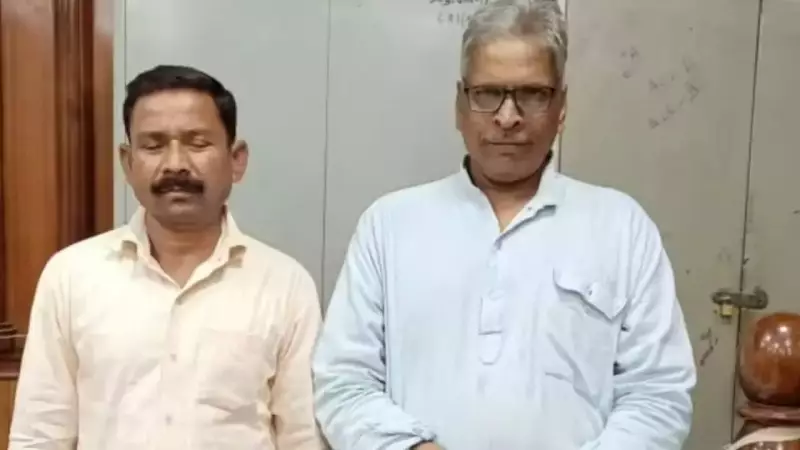
Ram Niranjan Kol, alias Raja Kolander, and Bachhraj Kol were convicted under IPC sections 364 (kidnapping for murder), 396 (dacoity with murder), 201 (destruction of evidence), 412, and 404. Both were sentenced to life imprisonment and fined Rs 2.5 lakh each, with 80% of the fine to be compensated to the victims' families.
Raja Kolander: The Self-Crowned King of Terror
The convict, Raja Kolander, was no ordinary criminal. A member of the Kol tribal community from eastern Uttar Pradesh, he once worked at an ordnance factory before retreating into a self-constructed world of absolute power. He renamed himself Raja Kolander (king of all), his wife Phoolan Devi, and his sons Adalat (court) and Zamanat (bail).
By 2000, his name already evoked menace. By 2012, he was convicted for murdering journalist Dhirendra Singh. Police had recovered 14 human skulls from his farmhouse, leading to widespread, though unproven, allegations of cannibalism and cementing his reputation as one of India's most chilling criminals, a collector of macabre trophies.
Twenty-five years after Manoj Kumar Singh and Ravi Srivastava embarked on their final journey, justice has been delivered. The Raja Kolander case stands as a stark reminder that some truths are buried for decades, waiting for a single piece of evidence—like a brown coat—to whisper the answers, proving that even the deepest trails of horror cannot escape the law forever.