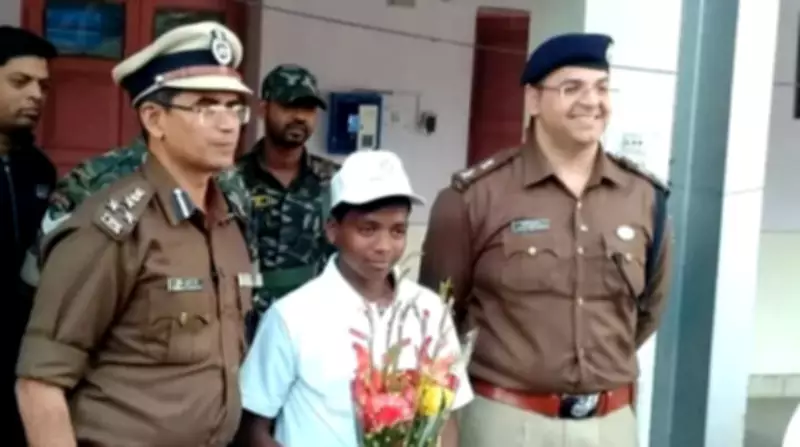
In a significant development highlighting the effectiveness of rehabilitation initiatives, an 18-year-old Maoist cadre from Jharkhand surrendered before the police in Rourkela, Odisha, on Tuesday. The surrender was formally announced during a media conference at the district police office, addressed by senior officials including DIG (western range) Brijesh Kumar Rai and Rourkela SP Nitesh Wadhwani.
Details of the Surrendered Cadre
The individual, identified as Prabhu (18), hails from Halamuli village under the Chhotanagra police station limits in West Singhbhum district, Jharkhand. Police authorities revealed that Halamuli village, situated deep within the Saranda reserve forest, has long been considered a strategic location utilized by Maoist cadres for arranging essential groceries and logistical support.
Involvement with Maoist Activities
According to police statements, Prabhu initially served as a militia member, assisting with supply arrangements and keeping watch during various Maoist operations. His involvement escalated in 2024 when he was allegedly recruited by a Maoist cadre named Birsa to join the local guerrilla squad. Prabhu remained associated with the extremist outfit for approximately two years and was attached to the south Chhotanagra division during this period.
Reasons Behind the Surrender
Officials detailed that Prabhu's decision to abandon the Maoist movement stemmed from growing disillusionment with the group's ideology. He cited experiencing consistent physical and mental harassment from senior leaders within the outfit. Additionally, the increasing pressure from frequent security force operations in the region contributed to his desire to leave.
Influenced by the Odisha government's proactive surrender and rehabilitation policy, Prabhu chose to return to the mainstream society. He formally surrendered before the Odisha police, seeking a path away from violence and extremism.
Rehabilitation Benefits Under State Policy
Under the provisions of Odisha's surrender-cum-rehabilitation policy, Prabhu, who is classified under Category B, will be entitled to financial assistance amounting to up to Rs 2.65 lakh. This assistance is part of a comprehensive package that includes various other benefits designed to facilitate his reintegration into society.
DIG Brijesh Kumar Rai emphasized the commitment to supporting individuals who choose to surrender, stating, "He has surrendered to join the mainstream and will be provided all assistance as per the Odisha government's surrender policy." This statement underscores the government's approach to encouraging surrenders through supportive measures rather than solely relying on punitive actions.
Strategic Implications and Regional Context
The surrender highlights ongoing efforts to combat left-wing extremism in the region, particularly in areas bordering Jharkhand and Odisha. The Saranda forest, known for its dense foliage and challenging terrain, has historically been a hotspot for Maoist activities. Prabhu's surrender from a village within this forest may indicate shifting dynamics and the impact of sustained security operations combined with persuasive rehabilitation policies.
This event also brings attention to the cross-border nature of Maoist influence, with cadres operating across state lines. The collaboration between state police forces and the implementation of attractive surrender policies are crucial strategies in weakening the hold of extremist groups in tribal and forested regions.