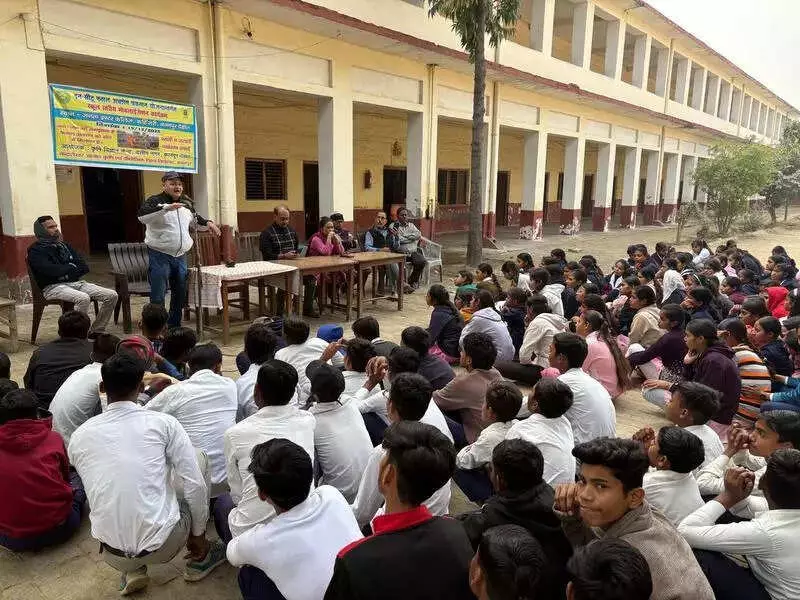
In a significant push to educate the younger generation on sustainable farming, a school-level awareness programme was recently conducted in Kanpur. The event focused on the critical issue of crop residue management and its positive impact on agriculture.
KVK Kanpur Leads Educational Initiative
The programme was organised by the Krishi Vigyan Kendra (KVK), which operates under the Chandra Shekhar Azad Krishi Evam Praudyogik Vishwavidyalaya Kanpur. This initiative falls under the broader government-backed crop residue scheme, aimed at curbing stubble burning and promoting eco-friendly alternatives.
Over 125 enthusiastic students participated in the interactive session, marking a strong turnout and reflecting growing interest in agricultural science among youth.

Expert Insights on Stubble and Soil Health
The core of the programme was an informative talk delivered by soil scientist Khalil Kha. He provided detailed knowledge on the scientific benefits of incorporating stubble back into the fields. Kha explained that this practice is not just about waste disposal but is a key method for enhancing long-term soil vitality.
He emphasised that when crop residue is mixed into the soil, it acts as a natural fertiliser. This process enriches the earth with essential organic matter and nutrients, leading to:
- Increased soil fertility and structure.
- Improved moisture retention capacity.
- Reduced dependency on chemical fertilisers.
- A sustainable solution to the seasonal problem of stubble burning.
Building a Sustainable Agricultural Future
The programme's primary goal was to seed awareness early. By targeting school students, KVK Kanpur aims to foster a new generation of farmers and citizens who understand and value sustainable practices. Educating youth on crop residue management is a strategic step towards mitigating environmental pollution and enhancing farm productivity simultaneously.
Such initiatives are crucial for states like Uttar Pradesh, where agriculture is a primary livelihood. Transforming stubble from a waste problem into a resource for soil fertility can revolutionise farm economics and ecology. The active participation of over 125 students indicates a promising shift towards embracing these green techniques from a young age.