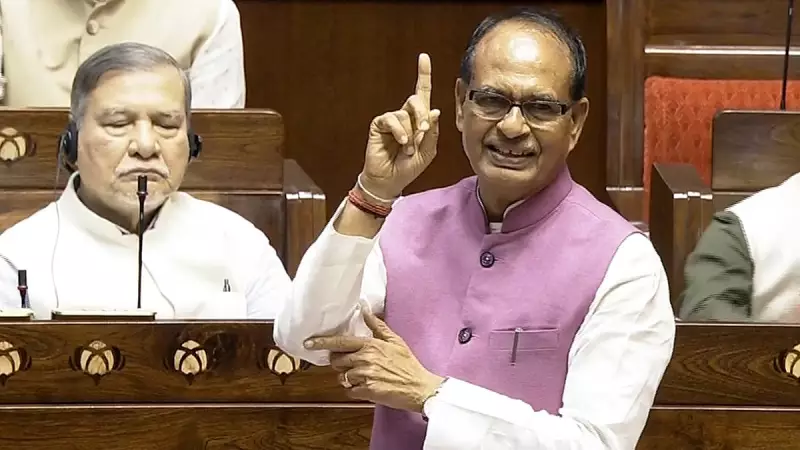
In a significant legislative move aimed at transforming India's rural employment landscape, Union Minister for Rural Development, Shivraj Singh Chouhan, presented a new bill in the Lok Sabha on Tuesday. The proposed legislation, named the VB-G RAM G Bill, seeks to overhaul existing frameworks and establish a modern statutory foundation for job creation and security in villages.
A Legislative Push for Modern Rural Employment
The introduction of the bill marks a pivotal step by the government to align rural development strategies with the long-term national vision. According to an official statement released by the Rural Development Ministry, the core objective of the VB-G RAM G Bill is to create a contemporary legal structure. This new framework is explicitly designed to support the ambitious goal of 'Viksit Bharat 2047' – a developed India by its 100th year of independence.
Details and Strategic Intent
The bill was tabled in the lower house of Parliament on 16 December 2025. While the full text of the legislation is awaited for detailed scrutiny, the ministry's announcement highlights its focus on statutory modernization. The move suggests a potential shift from existing schemes towards a more robust, rights-based, or outcome-oriented legal guarantee for rural employment.

This initiative is seen as a direct effort to address evolving economic needs and ensure that growth in rural India is sustainable and inclusive. By proposing a new law, the government signals its intent to strengthen the institutional mechanisms governing work and wages in the country's vast rural heartland.
Implications and the Road Ahead
The tabling of the bill is just the first step in the legislative process. It will now be examined by relevant parliamentary committees, debated upon by members of the Lok Sabha and Rajya Sabha, and potentially amended before being put to a vote. The passage of such a bill could have far-reaching consequences for millions of rural households dependent on government-backed employment initiatives.
Analysts suggest this could be an upgrade or a successor to existing flagship programs, aiming for greater efficiency, transparency, and coverage. The emphasis on a "modern statutory framework" indicates a move towards integrating technology, skill development, and asset creation into the core of rural employment policy.
As the bill proceeds through parliamentary channels, its provisions will be closely watched by stakeholders, including state governments, implementation agencies, and rural communities themselves, who stand to be the ultimate beneficiaries of this proposed legal overhaul.