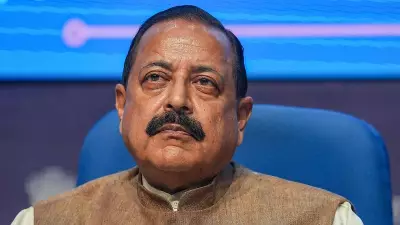
Kolkata: The Union Budget has significantly reinforced India's strategic push towards achieving Atmanirbhar Bharat in defence and fostering next-generation military technologies, according to DRDO director general Binoy Kumar Das. Speaking on Sunday, Das emphasized the government's continued support for deep-tech research, semiconductor self-reliance, and the development of indigenous weapons systems, marking a pivotal moment for India's defence sector.
Budget Aligns with Evolving Geopolitical Realities
Addressing reporters after receiving an award at a JIS Group ceremony, Das pointed out that changing geopolitical dynamics and evolving war scenarios have rendered import dependence untenable for India. He stressed that the nation must forge its own path in defence technology to ensure national security and strategic autonomy in an increasingly complex global landscape.
Semiconductor Mission 2.0: A Game Changer
On the same day that Finance Minister Nirmala Sitharaman announced the launch of India Semiconductor Mission 2.0 in the Budget—aimed at producing equipment and materials, developing full-stack Indian intellectual property, and strengthening supply chains—Das highlighted specific breakthroughs. He singled out Gallium Nitride (GaN) semiconductor chips as a "game changer in radar and electronic warfare systems, particularly for fighter aircraft."

"In fighter aircraft, space and power are premium. GaN enables higher performance with optimal power and space requirements," Das explained, underscoring the critical role of these advanced chips in enhancing military capabilities. This technological advancement is seen as a key step toward reducing reliance on foreign suppliers and boosting indigenous innovation.
Overcoming Technology Denial Through Self-Reliance
Reflecting on past challenges, Das recalled instances where foreign powers repeatedly denied technology to India, citing the early days of the country's missile programme. "When we mastered systems, subsystems were choked. When subsystems were realised, basic components were denied," he said, illustrating the hurdles faced in the pursuit of defence autonomy.
In response, India has deepened its commitment to self-reliance rather than depending on external suppliers. Das estimated that developing core semiconductor technologies would take another five to 10 years, but expressed confidence that "once we have our own chips, nobody can choke our production." This timeline underscores the long-term vision required for achieving technological sovereignty in critical areas.
Future Warfare and Technological Dominance
Das noted that modern warfare is increasingly defined by technology dominance, with factors such as autonomy, range, lighter platforms, and higher lethality shaping future defence systems. "We, the scientists, are now thinking like soldiers on the battlefield—what equipment is needed and how it should perform," he said, highlighting the collaborative approach between researchers and military personnel in developing cutting-edge solutions.
Budget's Unwavering Support for Indigenous Innovation
Reacting to the defence allocation in the Budget, Das stated: "The Union Budget reaffirmed the government's unwavering support for indigenous defence innovation. We were asked to work on next-generation technologies that nobody else in the world has," adding that funding has never been a constraint for DRDO. This assurance from the government is expected to accelerate research and development efforts across various defence domains.
Morale within DRDO remains high, driven by a growing confidence in India's ability to design, develop, and deploy world-class defence technologies indigenously. "India today believes it can lead the world in defence technology," Das concluded, reflecting a sense of national pride and ambition in the scientific community. This sentiment aligns with broader efforts to position India as a global leader in defence innovation and self-sufficiency.