Nagpur Metro Officials Retrieve High-Value Gold Bracelet Through Diligent Investigation
In a remarkable display of efficiency and public service, MahaMetro authorities in Nagpur have successfully recovered a valuable gold bracelet, weighing 3.5 tolas and estimated to be worth over ₹5 lakh, which was lost by a commuter at the Sitabuldi Interchange Metro Station. The recovery was made possible through a meticulous investigation involving CCTV footage review and coordinated efforts with security staff.
Incident Details: How the Bracelet Was Lost
The incident unfolded when Shashidevi Mohta, a prominent restaurant chain owner, was traveling on the Nagpur Metro from Rahate Colony station towards Vaishno Devi Chowk. After disembarking at the busy Sitabuldi Interchange station and switching platforms to continue her journey, Mohta inadvertently dropped the precious gold bracelet near Lift 4 on Platform 3. The loss went unnoticed until she had already boarded her onward train, leaving her distressed about the missing ornament.
Swift Action and Investigation Process
Upon realizing the bracelet was missing, Mohta's family promptly filed a formal complaint with MahaMetro's Loss and Found section. Demonstrating commendable responsiveness, Metro officials immediately launched an investigation. The team meticulously reviewed extensive CCTV footage from the interchange station and conducted interviews with security personnel and commuters who were present at the time of the incident.

The CCTV footage proved crucial, revealing that a regular commuter had picked up the bracelet from the platform. The individual was seen inquiring with nearby passengers about the ownership of the item before departing the station. This footage provided the first significant lead in the case.
Advanced Tracing Through Passenger Records
Further analysis of the CCTV footage showed that the commuter who found the bracelet had used a Maha Card for metro travel. This detail allowed MahaMetro officials to access the metro's comprehensive passenger records system. By cross-referencing the card usage data with the CCTV timestamps, authorities were able to accurately trace the individual's identity and contact information.
When contacted by MahaMetro officials, the commuter cooperated fully with the investigation and agreed to return the valuable ornament without hesitation. This cooperative approach facilitated a smooth recovery process.
Formal Handover and Appreciation
After successfully recovering the gold bracelet, MahaMetro officials promptly informed Shashidevi Mohta about the positive development. Due to prior commitments, Mohta requested her daughter, Preeti Jain, to collect the recovered item on her behalf.
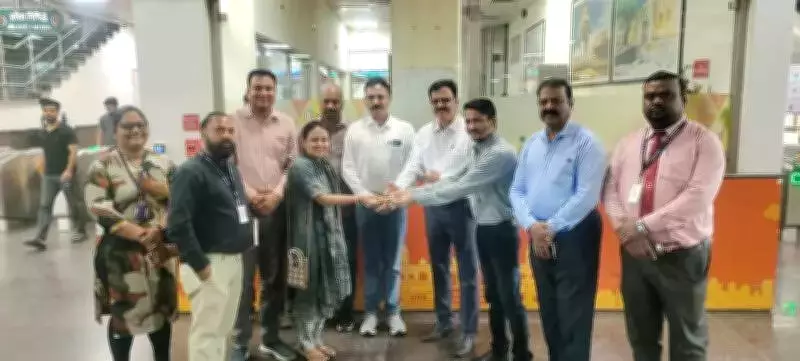
The formal handover ceremony was conducted by Sudhakar Urade, General Manager (Operations) of MahaMetro, who presented the bracelet to Preeti Jain. During the handover, Jain expressed profound gratitude to the Metro authorities for their prompt action and dedicated efforts in recovering the high-value ornament. She specifically praised the systematic investigation approach and the professionalism demonstrated by all involved personnel.
Broader Implications and Public Service Excellence
This incident highlights several important aspects of modern public transportation management:
- Effective Security Infrastructure: The comprehensive CCTV network at Nagpur Metro stations proved instrumental in resolving this case.
- Integrated Passenger Systems: The Maha Card system enabled precise identification through travel records.
- Responsive Grievance Mechanisms: The efficient Loss and Found section demonstrated its effectiveness in handling valuable property cases.
- Public Cooperation: The commuter who found the bracelet showed civic responsibility by cooperating with authorities.
The successful resolution of this case serves as a testament to MahaMetro's commitment to passenger safety and property security. It reinforces public confidence in the metro system's ability to handle sensitive situations involving valuable personal belongings. The coordinated efforts between surveillance teams, security personnel, and administrative staff created a model response that other transit systems might well emulate.