

Kullu-Manali Highway Under Intense Scrutiny as Protection Walls Fail Before Floods
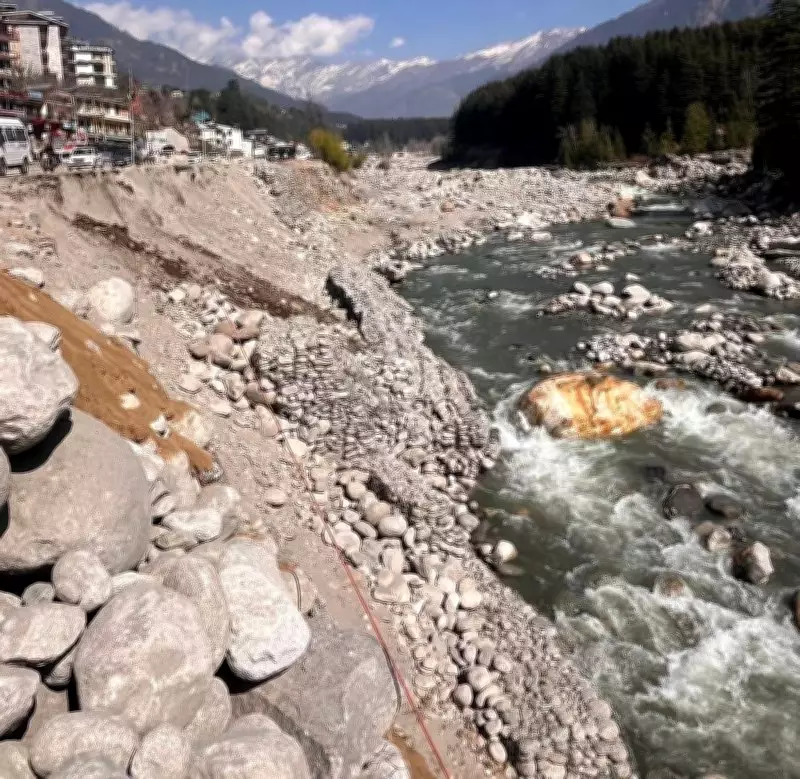
The Kullu-Manali National Highway-03 is facing severe criticism and scrutiny after retaining walls and protective barriers collapsed prematurely, even before the onset of recent floods. This incident has raised serious concerns about the quality of construction and the effectiveness of flood mitigation measures along this crucial route.
Allegations of Substandard Construction and Temporary Fixes
Local residents and hoteliers have come forward with alarming allegations against the contractors responsible for the highway's protection structures. According to reports, contractors have installed only mud walls and temporary stone crates along the banks of the Beas River, instead of the permanent, robust protections that were promised. These makeshift barriers gave way recently, indicating a failure in both design and execution.
Manoj, a local resident, highlighted that temporary barricades have also collapsed, underscoring the insufficiency of the National Highways Authority of India's (NHAI) efforts. Roshan Thakur, a hotelier from Manali, echoed these concerns, stating that the use of substandard materials and unscientific methods has left the highway fragile and vulnerable to natural disasters.

Historical Damage and Incomplete Restoration
The highway has a history of repeated damage, with significant sections caving in during the first major floods of 2023. Despite two years passing, many damaged portions remain incompletely restored, and the NHAI's efforts for full recovery have been deemed inadequate by locals. In 2025, similar devastation occurred when right-bank sections at locations like Dohlunala, Raison, and Aloo Ground were washed away, forcing the opening of temporary routes to maintain traffic flow.
Ramesh Thakur, another hotelier, lamented, "We are paying the price for rushed development." He pointed out that several stretches of the highway still operate as single-lane roads, never upgraded to the planned two lanes, let alone the originally envisaged four lanes. This discrepancy between planning and execution has fueled public frustration and skepticism.
NHAI's Response and Future Plans
In response to the crisis, the NHAI has announced plans for permanent solutions. It has approved Rs 400 crore for the construction of dam-style RCC retaining walls at 12 vulnerable sites along the highway. NHAI officials, including Resident Engineer Ashok Chauhan, have stated that only temporary maintenance is currently feasible to keep traffic moving. Chauhan also announced the installation of approximately 1,500 JCC concrete barriers between Kullu and Manali to prevent accidents in flood-hit zones, with efforts to spruce up the highway for the tourist season by March.
Additionally, at Ramshila on the Kullu-Bhuntar road, which was washed away last year, the state Public Works Department is undertaking strengthening and widening work at a cost of Rs 1 crore.
Ongoing Skepticism and Demands for Accountability
Despite these measures, skepticism persists among residents and stakeholders. Many stretches of the highway still await permanent reinforcement, and every monsoon season renews fears of further damage. Locals argue that without proper design and the promised widening to four lanes, the highway will remain a death trap, jeopardizing tourism and local livelihoods.
With so much at stake, citizens are demanding greater accountability for past construction work and assurances that the highway will be made truly flood-proof. The call is for transparent, scientific, and durable infrastructure that can withstand the challenges posed by the region's harsh weather conditions.






