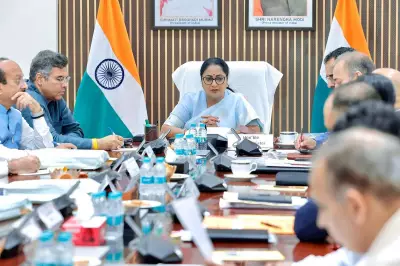
The Karnataka Administrative Reforms Commission-II has delivered a significant set of recommendations aimed at streamlining government functioning and ensuring fiscal discipline. In its final report submitted to Chief Minister Siddaramaiah, the commission has strongly advised against launching open-ended welfare schemes.
Fixed Tenure and Mandatory Review for Schemes
The commission, chaired by Congress MLA R V Deshpande, presented its final report on Tuesday, December 30, 2025. A central recommendation is that the state government should not initiate any new welfare scheme for an indefinite period. Instead, every new scheme must have a clearly defined mission with a fixed time frame of three to five years.
Each scheme must be backed by a results framework that includes baseline data, annual milestones, and specific outcome indicators. The report emphasizes measurable targets such as the intended number of beneficiaries, geographical coverage, and expected outcomes from the very beginning.

Even if a scheme is to be continued beyond the five-year mark, the extension should not be automatic. Any continuation would require an independent performance evaluation, clear proof of achieved outcomes, and a demonstration of the scheme's continuing relevance. The commission warned that routine extensions without such rigorous review indicate weak accountability and inefficient use of financial and human resources.
The "One-In, One-Out" Framework and Budget Scrutiny
To prevent the proliferation of schemes and the stretching of limited state resources, the panel proposed a radical "one-in, one-out" framework. This means that for every new scheme launched, an existing one must be stopped, merged, or discontinued.
The commission recommended institutionalizing an annual exercise during the budget finalization process to identify and close underperforming schemes. This would create the necessary fiscal space and manpower for new, priority initiatives announced in the budget.
Furthermore, the report calls for making the evaluation of all ongoing schemes mandatory at the budget stage. This assessment would scrutinize the scheme's objectives, physical progress, and financial performance. Schemes found to have low impact, persistent underperformance, or overlap with other interventions should be discontinued or merged.
Overhauling Administration and Staff Deployment
Beyond welfare schemes, the commission's final report contains a comprehensive set of 355 recommendations focused on administrative efficiency. Key suggestions include redeploying surplus staff from offices with low workloads to frontline and service-delivery functions.
The panel also advised converting obsolete clerical posts into technical or executive roles where needed, and abolishing posts that have remained vacant for a long time or have become functionally redundant. A significant recommendation is the freezing of the indiscriminate expansion of Group-C and Group-D cadres, along with optimizing the government's outsourcing practices.
Formed in 2021, the commission has submitted a total of 10 reports containing over 6,000 recommendations across 42 state departments. According to the Chief Minister's Office, 2,014 of these have been fully implemented, 186 partly implemented, and 2,274 are under examination by various departments.