

India's Next Census: A Digital Revolution for Generations G and Alpha
Hyderabad: The forthcoming Census of India represents a monumental generational and technological leap, fundamentally redefining how the nation captures and processes its population data. For Generation G and Generation Alpha—those born after 2010—this will be their first experience with a Census conducted entirely through digital platforms, marking a sharp departure from the paper-intensive methodologies of previous decades.
From Paper Mountains to Digital Streams
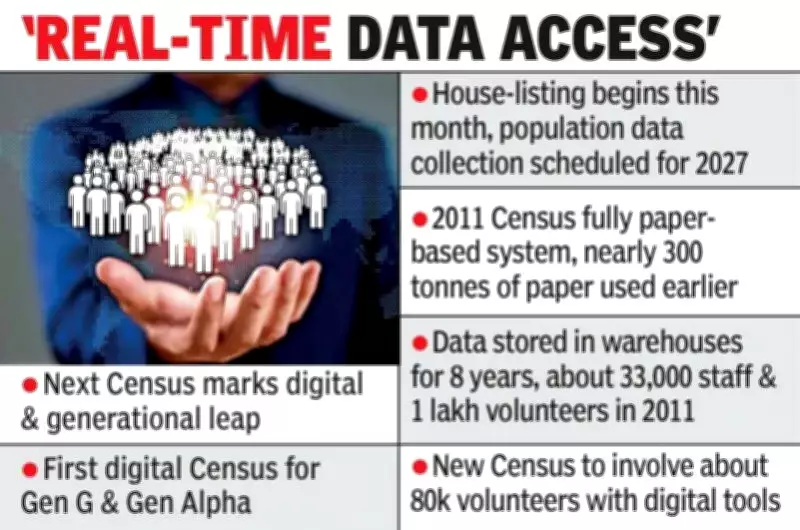
The process is set to commence with house-listing operations this month, while comprehensive population data collection is scheduled for 2027. This transition signifies a decisive shift from the 2011 Census conducted in united Andhra Pradesh, which included present-day Telangana. During that exercise, enumerators relied exclusively on paper forms to document household and individual information.
The scale of the 2011 operation was staggering. Authorities utilized nearly 300 tonnes of paper, with records stored in massive warehouses for approximately eight years. Data processing was notoriously slow, often stretching over multiple years, with final reports submitted long after the enumeration phase concluded.

In 2018, authorities initiated the disposal of this enormous paper stock. "The paper was sold for about Rs 57 lakh and then entirely converted into pulp, representing good practice," sources revealed. Earlier, in preparation for the 2011 Census, the Census directorate in Hyderabad had announced plans to auction the entire paper stock, with a top bidder from Pune eventually acquiring it.
Streamlined Operations and Reduced Manpower
The manpower involved in previous Censuses was equally significant. The 2011 Census engaged approximately 33,000 supervisors and over one lakh volunteers across the region. In contrast, the upcoming exercise in Telangana is expected to involve about 80,000 volunteers, but with a far more streamlined, technology-driven approach that enhances efficiency.
The next Census, originally scheduled for 2021, was postponed due to the Covid-19 pandemic, allowing additional time for digital infrastructure development.
Digital Transformation and Governance Impact
Officials confirm that paper will now be used sparingly, limited primarily to remote areas where internet access remains challenging. "Even the minimal data collected on paper must be promptly updated on the portal under the supervision of mandal-level officers," sources emphasized.
The shift to digital extends beyond mere convenience. It represents a broader transformation in governance—significantly reducing delays, improving data accuracy, and enabling real-time access to critical population information. What once required tonnes of paper, years of storage, and prolonged processing will now proceed faster and more efficiently.
This technological advancement is reshaping how India plans development initiatives, allocates resources, and understands its rapidly evolving population dynamics. The digital Census promises to provide policymakers with timely, accurate data essential for informed decision-making across sectors including healthcare, education, infrastructure, and social welfare.
The transition reflects India's commitment to leveraging technology for improved governance and public service delivery, setting a precedent for future demographic surveys and establishing a robust framework for capturing the nation's demographic story in the digital age.






