

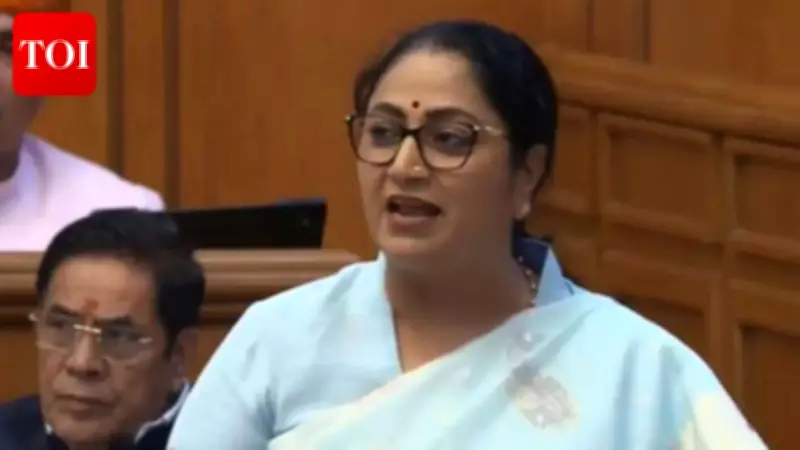
Delhi Chief Minister Rekha Gupta Unveils Comprehensive Air Pollution Mitigation Action Plan 2026
Delhi Chief Minister Rekha Gupta on Friday officially launched the Air Pollution Mitigation Action Plan 2026, introducing a robust series of measures designed to tackle the capital's persistent air quality crisis. The announcement, made during a high-level review meeting at the Mukhyamantri Janseva Sadan, outlines strict enforcement protocols, technological integration, and significant budgetary backing to achieve measurable clean air outcomes.
Strict Vehicular Controls and Enforcement Mechanisms
At the core of the plan is a stringent approach to vehicular emissions. Chief Minister Gupta emphasized that the 'No PUC, No Fuel' rule will be rigorously implemented with support from Automatic Number Plate Recognition (ANPR) cameras and advanced digital tracking systems. From November 1, entry of goods vehicles into Delhi will be restricted exclusively to those compliant with Bharat Stage (BS)-VI norms or powered by CNG or electricity.
Officials further detailed that the government will regulate non-essential traffic inflow and may consider implementing staggered office timings, work-from-home directives, and additional restrictions on polluting vehicles during periods of severe air pollution. To ease congestion, time-bound interventions are planned at 62 identified traffic hotspots, alongside the rollout of an Intelligent Traffic Management System and smart parking solutions.

Expansion of Clean Transport and Electric Mobility
As part of efforts to reduce emissions from public transport, the government plans to expand the city's bus fleet to 13,760 by 2028-29, with priority given to electric buses. Last-mile connectivity will be enhanced through better integration of metro and Regional Rapid Transit System (RRTS) networks with feeder buses, e-autos, and shared mobility services.
To accelerate the shift to electric vehicles, 32,000 EV charging points will be installed over the next four years. The proposed EV Policy 2026 will specifically focus on two-wheelers, commercial vehicles, and transitioning government fleets to cleaner fuels.
Combatting Dust and Construction Pollution
Recognizing road dust as a major pollution contributor, the government announced large-scale deployment of mechanical road sweepers, water sprinklers, anti-smog guns, and mist spray systems. All operations will be monitored through GPS tracking and a centralized dashboard.
Nearly 3,500 km of roads are slated for redevelopment with paved surfaces, green buffers, and utility ducts. Construction-related pollution will be monitored through an artificial intelligence (AI)-enabled C&D Portal 2.0 for real-time tracking, geo-tagging, and enforcement.
Landfill Clearance and Enhanced Monitoring
The government has set strict deadlines for clearing legacy landfill sites: Okhla by July 2026, Bhalswa by December 2026, and Ghazipur by December 2027. Strong action will be taken against biomass burning and non-compliant industrial units.
Delhi's air quality monitoring network will be expanded, and a centralized Green War Room and Integrated Command and Control Centre will be established to strengthen environmental governance. Ward-level 'Vayu Rakshak' teams will be deployed, and the 311 platform upgraded to improve citizen reporting and participation.
Green Initiatives and Public Participation
The government has set an ambitious target of planting 70 lakh trees, shrubs, and bamboo in 2026-27, with a long-term goal of over one crore plantations across the city. Chief Minister Gupta highlighted that the action plan will rely on innovation and public participation, involving research institutions, technical experts, and startups in developing pollution-curbing solutions.
'The Action Plan 2026 is not just about intent; it is a robust execution model with financial backing, strict timelines, and accountability at every level. Clean air is not a luxury; it is a fundamental right, and we are committed to delivering it,' Gupta stated.

The meeting was attended by cabinet ministers Pravesh Sahib Singh, Manjinder Singh Sirsa, and Pankaj Kumar Singh, Chief Secretary Rajiv Verma, representatives from the Delhi Metro Rail Corporation and Traffic Police, and senior government officials.





