

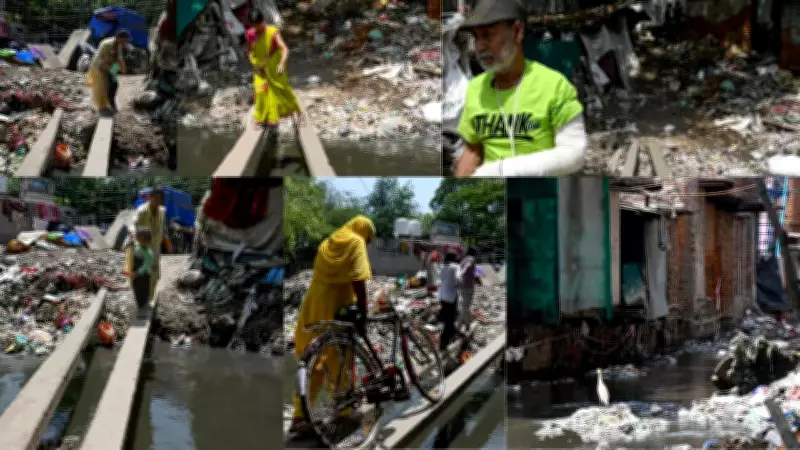
Okhla's Makeshift 'Shortcut Bridge' Poses Deadly Risk to Residents Daily
In a congested area of Okhla Phase-I near Indira Camp, two narrow cement planks, originally intended for electric poles, have become a critical lifeline for hundreds of residents navigating a waterlogged drain every day. This so-called "shortcut bridge" has evolved into a severe safety hazard over the years, linked to multiple injuries and at least one reported fatality.
A Perilous Daily Crossing
Residents describe how the makeshift structure forces people to balance dangerously while moving between two sides of the locality. Vishaka Devi, 35, while crossing with her four-year-old grandson on her shoulder, recalled that the bridge was once wider and safer. "There used to be three slabs. Now only two are left, making it difficult and risky to cross," she said. Devi suffered injuries in November during one such precarious trip and is still undergoing hospital treatment. "I have to cross this 'bridge' 30-35 times a day to get supplies for my general store. I have no other option," she added.
Injuries and Tragic Death Highlight Dangers
Another resident, 55-year-old Nipen Chand Rai, sustained a fracture after slipping at the same spot during rain about 10 days ago. The most alarming case involves 50-year-old Suresh Kumar, who fell into the drain two months ago and died a month later after falling ill due to exposure to contaminated water. Residents say the plank was initially installed as a temporary measure, but it has persisted for years, with conditions worsening significantly during the monsoon season.

Monsoon Woes and Community Efforts
Ramesh Yadav, 42, who has lived in the area for 25 years, noted, "It's been like this for a long time. When it rains, the plank shifts and the water rises up to here," gesturing towards his waist. Over the years, residents have repeatedly repaired and repositioned the plank at their own expense. Karan Poddar, 31, explained, "Whenever it breaks or slips, we gather people from the area and repair it again." Despite these efforts, the makeshift bridge remains a constant threat, underscoring the urgent need for a permanent infrastructure solution to ensure safety for the community.






