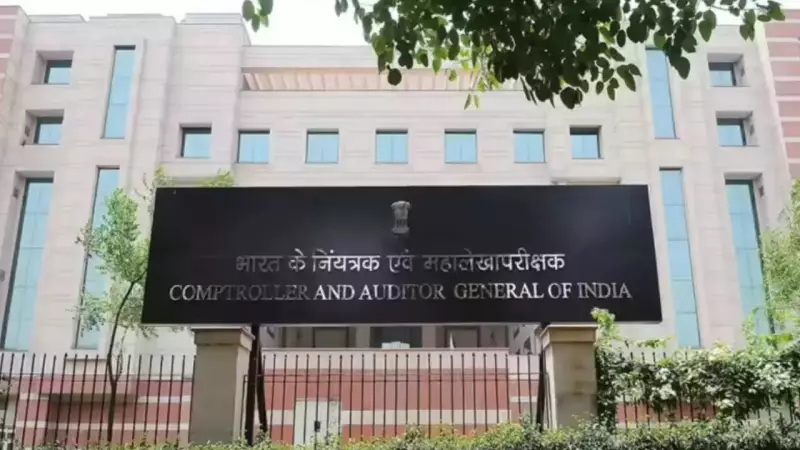
A damning report from the Comptroller and Auditor General (CAG), presented in the Uttar Pradesh Vidhan Sabha on Wednesday, has laid bare extensive planning failures and financial mismanagement in the execution of two flagship national rural electrification programs. The audit scrutinized the implementation of the Deendayal Upadhyaya Gram Jyoti Yojana (DDUGJY) and the Pradhan Mantri Sahaj Bijli Har Ghar Yojana (SAUBHAGYA) in the state, uncovering losses amounting to a staggering Rs 2,002.61 crore in central grants.
Flawed Planning and Inflated Claims
The schemes, launched by the central government in 2014 and 2017 respectively, were designed to bolster rural electricity infrastructure and achieve universal household electrification. However, the CAG audit found fundamental flaws from the very beginning. For the SAUBHAGYA scheme, the detailed project reports (DPRs) prepared by the Uttar Pradesh Power Corporation Limited (UPPCL) completely overlooked a crucial mandate: providing off-grid solar power connections for remote and inaccessible areas.
This critical omission left a key component of the national program unaddressed. Furthermore, the audit discovered a significant gap between claimed and actual achievements. The state power distribution companies (discoms) declared saturation of the SAUBHAGYA scheme by December 2018, reporting 64.67 lakh new connections. In reality, only 33.23 lakh connections had been released by that deadline, with another 28.42 lakh completed later. This premature declaration resulted in the state foregoing central grants worth Rs 1,094.14 crore.

Financial Mismanagement and Missed Milestones
The financial irregularities under the DDUGJY scheme were even more severe. The discoms failed to meet prescribed milestones, such as timely project completion. Projects were delayed by 29 to 49 months, and targets for reducing Aggregate Technical & Commercial (AT&C) losses were not achieved. Due to these failures, loans amounting to Rs 1,816.94 crore could not be converted into grants, leading to an additional financial loss of Rs 908.47 crore.
A core objective of DDUGJY was the separation of agriculture and non-agriculture feeders to enable better power management and supply. The audit revealed this goal remained largely unfulfilled. In a sample check across seven districts, it was found that 71.22% of agricultural consumers were still connected to non-agriculture feeders, defeating the purpose of the scheme.
Wasteful Expenditure and Irregular Payments
The CAG report detailed numerous instances of unnecessary and excessive spending. Discoms incurred an avoidable expenditure of Rs 402.44 crore by applying cement concrete grouting to over 24 lakh single concrete poles. This was contrary to scheme specifications, which required only refilling with boulders.
In preparing DPRs, two discoms—MVVNL and DVVNL—overpaid contractors by Rs 3.33 crore due to inflated cost calculations. Tax-related errors also added to the losses. PVVNL incorrectly claimed Goods and Services Tax (GST) on materials, inflating project costs by Rs 3.63 crore. Due to delayed claims, the company also failed to secure a reimbursement of Rs 4.21 crore in state taxes.
Irresponsible financial practices were rampant. PuVVNL took an excess loan of Rs 66 crore from the Rural Electrification Corporation (REC), leading to an unnecessary interest burden of Rs 3.94 crore. Separately, PVVNL paid excess interest of Rs 7.19 crore to REC by not verifying the correct applicable interest rate.
Perhaps most strikingly, the CAG identified Rs 26.65 crore in excess payments made to Turnkey Contractors (TKCs). These payments were based on duplicate or irregular claims, including payments for electricity connections that had already been provided under other government schemes.

In its conclusion, the CAG stated that the audit paints a picture of poor planning, weak financial oversight, and non-compliance with guidelines. These systemic failures have ultimately undermined the efficiency and core objectives of the central government's ambitious rural electrification drive in Uttar Pradesh, raising serious questions about governance and accountability in the execution of critical infrastructure projects.