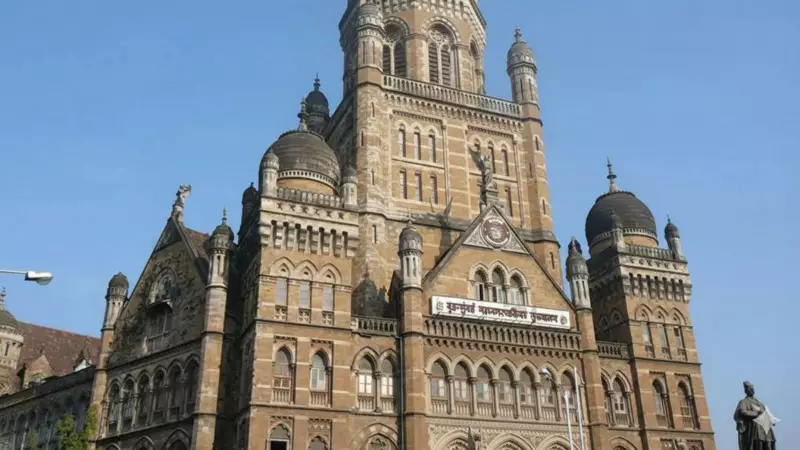
The Brihanmumbai Municipal Corporation (BMC) has initiated a major road improvement project for two of the city's most critical arterial roads. On Monday, December 15, 2025, the civic body floated two separate tenders with a combined value of Rs 129 crore for carrying out specialised micro-surfacing work on the Western Express Highway (WEH) and the Eastern Express Highway (EEH).
Project Scope and Financial Breakdown
According to the tender documents, the ambitious project will cover a total stretch of 15.4 kilometres across both highways. The cost per kilometre for this advanced resurfacing technique is pegged at approximately Rs 8.41 crore. A detailed financial breakdown reveals that the BMC will spend Rs 69 crore on the work for the Western Express Highway, while an allocation of Rs 60 crore has been made for the Eastern Express Highway.
The specific stretches identified for the work have been finalised. On the EEH, resurfacing will be carried out over a 7.9 km stretch from Kamraj Nagar in Ghatkopar to Amar Mahal in Chembur. For the WEH, the work will cover a 7.5 km segment between the Oberoi Mall Junction in Goregaon and Magathane in Borivali.

Why Micro-Surfacing and the Road Ahead
A senior civic official explained the rationale behind choosing micro-surfacing and the phased approach. The WEH and EEH were transferred from the Mumbai Metropolitan Region Development Authority (MMRDA) to the BMC's jurisdiction in 2023. Since the takeover, only about 30% of the total highway stretch has been resurfaced, leaving a significant 70% pending.
Micro-surfacing is a modern road maintenance technique where a mixture of polymer-modified asphalt emulsion, water, and specific additives is applied to a worn-out road surface. This process extends the road's lifespan by sealing cracks, improving surface friction, and preventing further deterioration. Crucially, it is a cost-effective solution with an average thickness of just 8mm, compared to traditional asphalt layers which can be 25mm to 40mm thick.
The official stated that the BMC intends to complete this current phase of work within a year. Furthermore, the corporation plans to undertake similar repairs in patches on these highways annually. This strategy is designed to be both fiscally prudent and to minimise traffic disruption on these vital corridors, which handle the maximum vehicular load in the metropolis. The move also follows directions given a month prior by BJP MP from Mumbai (North), Piyush Goyal, who urged the BMC to carry out surfacing work on Mumbai's roads.
A Long-Term Strategy for Smarter Roads
The BMC's plan underscores a shift towards sustained, preventative maintenance rather than reactive repairs. By adopting micro-surfacing in annual patches, the civic body aims to ensure that Mumbai's key north-south connectors remain even and smooth for commuters without causing prolonged, large-scale traffic inconveniences.
This project marks a significant step in the BMC's direct management of these crucial highways, aiming to enhance ride quality and safety for millions of Mumbaikars who depend on the Western and Eastern Express Highways daily.