

Bhopal's Water Supply System Faces Critical Strain as Amrut 2.0 Projects Lag
The Bhopal Municipal Corporation's water wing is grappling with immense pressure as it struggles to meet the demands of nearly 2 million residents. An assessment under the Amrut 2.0 scheme has revealed alarming delays in water supply projects, compounding existing infrastructure challenges.
Funding Utilization at a Mere 6% Highlights Execution Delays
Of the Rs 735 crore sanctioned for water infrastructure improvements, a paltry 6% has been utilized, according to recent reports. This stark figure underscores significant execution delays that threaten to exacerbate the city's water crisis, particularly as summer approaches.
Infrastructure Limitations Exposed in Administrative Report
The latest administrative report from Bhopal Municipal Corporation reveals the fragility of the current water supply system. Just 60 water tankers and 72 booster pumps are responsible for sustaining non-piped areas across 85 wards and 21 zones, leaving thousands dependent on erratic deliveries from distant pipelines.

Distribution infrastructure remains severely strained, with only 86 kilometers of mains channeling water to 62 storage tanks. While chlorination occurs at six intake wells supported by bi-hourly testing, critical gaps persist in the monitoring system.
Critical Data Gaps and Monitoring Limitations
The BMC report raises significant red flags regarding data collection and monitoring. No ward-wise coverage data exists, and peak demand metrics remain unmeasured. Despite 95% digitization of property and water tax records, household connections remain incomplete across many areas.
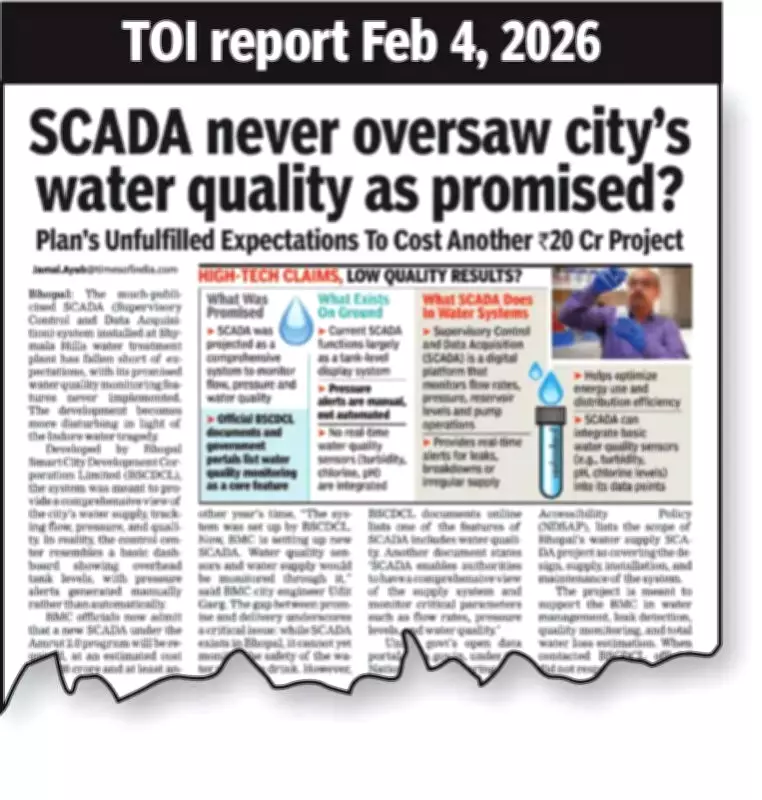
Technology upgrades, including SCADA integration and the BMC Monitor App, promise improved telemetry, but rollout specifics and measurable results remain unclear. A February 2026 TOI report highlighted that SCADA currently monitors only water flow, not water quality or leakages—a critical limitation for effective water management.
Summer Demands Loom as Disparities Risk Widening
Without accelerated progress on Amrut 2.0 projects, Bhopal faces the real risk of widening disparities between piped and non-piped areas. The entire water supply system remains vulnerable as the city approaches peak summer demands, when water consumption typically increases significantly.
The combination of underutilized funds, infrastructure limitations, and data gaps creates a perfect storm that threatens the water security of Bhopal's residents. Municipal authorities face mounting pressure to address these systemic issues before seasonal demands further strain the already fragile system.






