The political landscape in West Bengal has been jolted by a massive electoral roll revision that has seen the names of approximately 54 lakh (5.4 million) voters struck off the state's draft list. The Trinamool Congress (TMC), led by Chief Minister Mamata Banerjee, has expressed strong dissatisfaction with the move and has mobilized its cadre for a comprehensive verification drive.
Party Directs Grassroots Scrutiny in Key Constituencies
In response to the large-scale deletions, the TMC leadership has instructed its workers to initiate a fresh, door-to-door scrutiny of the removed names. The focus is particularly sharp in Bhabanipur, the Chief Minister's own assembly constituency, where nearly 45,000 electors were removed following the Election Commission's poll-roll purification exercise. The party has mandated that every deleted name must be physically verified, asserting that no valid voter should be excluded under any circumstance.
The directive comes as the process for hearing claims and objections is set to begin. The TMC has asked its local leadership to stand by affected voters during the verification process. Furthermore, the party's neighborhood-level 'May I Help You' camps will continue to assist people with documentation, form-filling, and hearings, with volunteers prepared to make home visits if necessary.

Scale of Deletion and High-Profile Impact
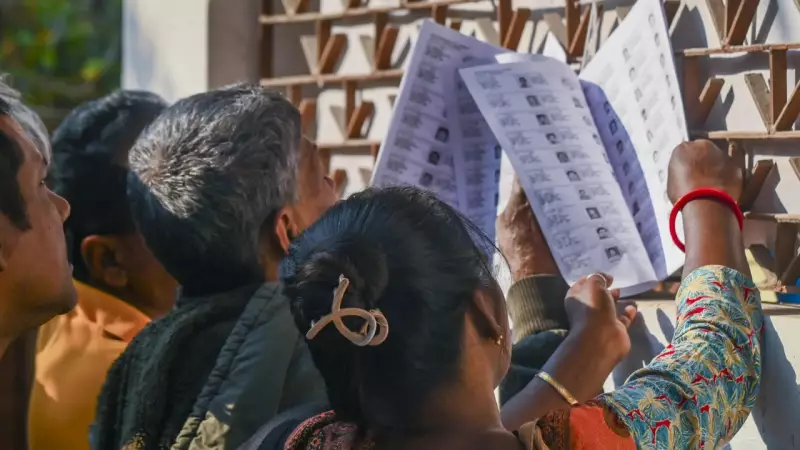
The Special Intensive Revision (SIR) exercise, which commenced on November 4 after the schedule was announced on October 27, has led to a significant reshaping of the voter profile. The state's electorate, which stood at 7,66,37,529, has been thoroughly reviewed. The draft rolls show deletions on grounds such as death, migration, and being marked as "shifted" or "absent."
The impact is stark in several politically significant constituencies. Four high-profile assembly seats—Bhabanipur, Kolkata Port, Ballygunge, and Rashbehari—collectively recorded over 2.16 lakh deletions, which constitutes nearly 24% of their combined electorate of about 9.07 lakh voters. Within Bhabanipur, wards 70, 72, and 77 saw particularly high numbers of names being removed, with ward 77—a minority-dominated area—flagged for special attention during the party's scrutiny.
ECI's Process and the Road Ahead
The Election Commission's process involved printing enumeration forms for all voters, which were delivered door-to-door by Booth Level Officers (BLOs). Voters who submitted signed forms, even if partially filled, were retained in the draft list, though their details are subject to further verification.
Poll body data reveals the complexity of the task. Over 30 lakh voters have been placed in a "no-mapping" category because their names could not be linked with the 2002 electoral rolls. Hearings for this group are scheduled to begin shortly. Additionally, around 1.7 crore voters are under varying degrees of scrutiny, with BLOs tasked to re-verify their details through door-to-door checks after the draft publication.
As the state moves closer to the 2026 assembly polls, the scale of these exclusions has ignited a major political controversy. The TMC's aggressive verification stance sets the stage for a tense period of claims, objections, and potential confrontations over the fundamental right to vote in West Bengal.