The Election Commission of India (ECI) has initiated a critical phase in its electoral roll revision process for West Bengal. Following the publication of the draft electoral roll under the Special Intensive Revision (SIR), the commission is now gearing up for extensive voter hearings across the state.
Hearings Schedule and Massive Scale
The hearings are scheduled to commence on December 23 and will continue until at least January 31. This process is a cornerstone of the SIR, aimed at ensuring the accuracy and integrity of the voter list. The scale of the exercise is monumental, with state-wide estimates suggesting it could involve over one crore (ten million) hearings.
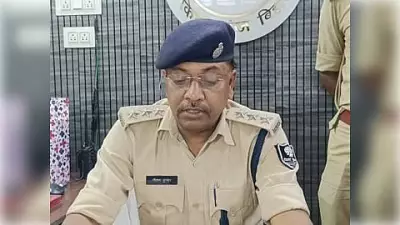
Chief Electoral Officer (CEO) of West Bengal, Manoj Agarwal, is spearheading the preparations alongside special observers deputed by the ECI. In a pivotal meeting held on Wednesday, Agarwal convened all 294 Electoral Registration Officers (EROs) of the state to outline a clear and structured protocol for the upcoming hearings.

Six Key Directives for Smooth Proceedings
The CEO's office issued six major directives to standardize the hearing process:
First, similar to enumeration forms, two copies of hearing notices will be issued. Booth Level Officers (BLOs) will be responsible for distribution. One copy is for the elector to retain, while the second must be signed by the elector and kept by the BLO as proof of delivery.
Second, all notices will be auto-generated through the official ECI application to maintain uniformity and reduce errors. Electors will be granted a one-week window to appear before the ERO or Assistant Electoral Registration Officer (AERO) after receiving the notice.
Third, and crucially, physical appearance is mandatory. The ECI has explicitly disallowed virtual hearings or representation by another person. However, if an elector fails to appear on the scheduled date, provisions exist to reschedule their hearing.
Fourth, all hearings must be conducted in government premises to ensure transparency and security. Preferred venues include Block Development Officer (BDO), Sub-Divisional Officer (SDO), or District Magistrate offices. If these are unavailable, another suitable government building can be earmarked.
Fifth, to manage the enormous volume efficiently, each ERO or AERO can now dispose of a maximum of 100 hearings per day. This cap was increased from an initial limit of 50 after considering the projected number of cases.
Sixth, hearing venues must provide adequate basic amenities. This includes proper seating arrangements, photocopying (xerox) facilities, and drinking water to ensure electors do not face any discomfort during the process.
Order of Hearings and Logistical Challenges
According to ECI sources, the hearings will follow a specific order. The first batch will involve electors whose records show no mapping with the 2002 SIR data. Subsequently, cases involving progeny mapping and logical discrepancies will be taken up. Even individuals in self-mapping cases with logical inconsistencies will be called for clarification.
To complete this massive task within the stipulated timeline ending January 31, the Bengal CEO's office has sought permission from the ECI to recruit additional AEROs. This request for extra manpower is currently pending approval from the commission.
This meticulous hearing process underscores the ECI's commitment to cleaning and updating the electoral roll, a fundamental exercise for upholding democratic integrity ahead of future elections in the politically significant state of West Bengal.