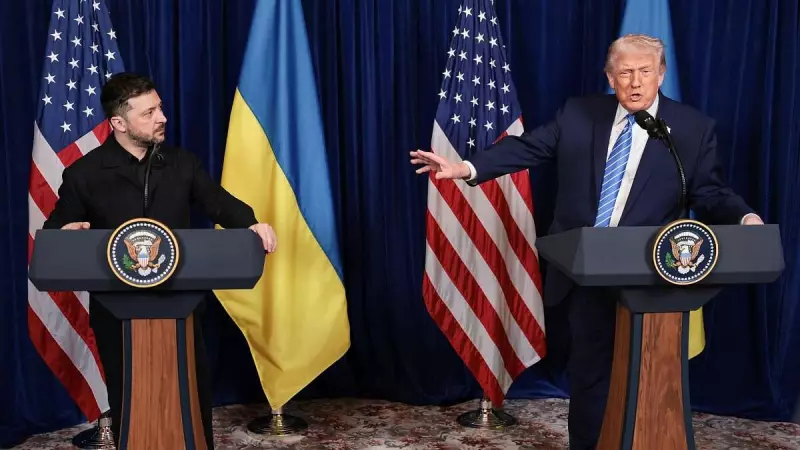
Ukrainian President Volodymyr Zelenskyy's recent diplomatic mission to Florida carried a significant, if unspoken, objective. For the wartime leader, merely ensuring that former US President Donald Trump remained in conversation was itself counted as a crucial victory. The visit, which took place as Zelenskyy arrived in Florida, unfolded against a backdrop of deep anxiety among Ukrainian officials and citizens alike.
Navigating Diplomatic Minefields in Florida
A primary concern shadowing President Zelenskyy's journey was the potential for a repeat of past high-pressure encounters. Many in Ukraine feared he might walk into another meeting where Donald Trump would apply direct pressure. The anticipated demand? That Zelenskyy agree to strike a quick peace deal with Russia, but crucially, on Moscow's terms. This scenario represents Kyiv's worst diplomatic nightmare, potentially undermining years of resistance and sacrifice.
The context of this meeting is critical. Donald Trump, as the presumptive Republican nominee for the upcoming US presidential election, holds substantial sway over the future of American foreign aid to Ukraine. His previous statements advocating for a rapid end to the conflict have consistently alarmed Ukrainian leadership, who view such a move as a concession to Russian aggression.

The Stakes: More Than Just a Conversation
The reported date of the interaction, 29 December 2025, marks a pivotal moment in international diplomacy. For Zelenskyy, the calculus was straightforward but delicate. Engaging Trump directly, without ceding ground on Ukraine's core demand—the restoration of its territorial integrity—was the tightrope to walk. The mere act of maintaining an open channel of dialogue with such a influential figure in American politics is seen as a strategic necessity.
This approach underscores a harsh reality of wartime statecraft. When the balance of military support can shift with political winds, keeping key global players invested in the conversation, even if full agreement is elusive, becomes a win. The alternative—being sidelined or dictated terms by a powerful ally—could be far more damaging to Ukraine's long-term prospects.
Implications for the Russia-Ukraine War
The outcome of this Florida engagement has immediate and future consequences. In the short term, it prevents a complete breakdown in communication between Kyiv and a potential future US administration. It also allows Zelenskyy to personally convey the situation on the ground and the dire need for sustained support, countering any narrative that might favour a rushed settlement.
Analysts suggest that for Ukraine, every discussion that does not end with a forced acceptance of Russian terms is a success. It buys time, maintains international focus, and reinforces the principle that any peace must be just and sustainable, not merely expedient. The fear of a quick peace deal on Moscow's terms remains the central spectre haunting these diplomatic manoeuvres.
Ultimately, Zelenskyy's mission highlights the complex, often unglamorous work of leadership during a protracted war. Where grand breakthroughs are rare, the incremental work of preserving alliances and managing relationships with powerful, sometimes unpredictable, figures becomes the daily measure of progress. In this context, just keeping the conversation alive is not a minor feat; it is a fundamental component of national survival.