Trump Defends Social Media Threat as Key to Iran Negotiations
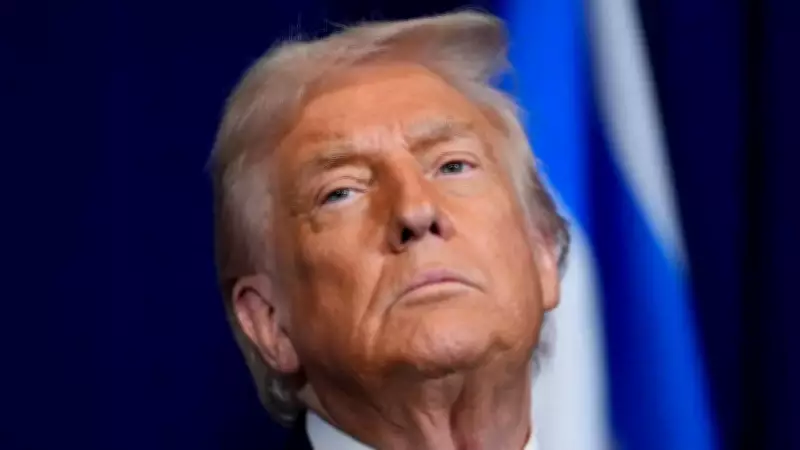
Former US President Donald Trump claimed on Sunday that his inflammatory social media post threatening to "wipe out Iranian civilization" was instrumental in bringing Iran to the negotiating table. During a telephone interview with Fox News, Trump addressed criticism of his online rhetoric, stating he is "fine with it" and emphasizing the perceived effectiveness of his approach.
"That Statement Got Them to the Bargaining Table"
"Let me tell you, that statement got them to the bargaining table, and they haven't left. They haven't left the bargaining table. I predict they come back and they give us everything we want," Trump declared. He outlined his uncompromising stance, adding, "I tell my people I want everything. I don't want 90%. I don't want 95%. I told them I want everything."
Trump contrasted his comments with hostile rhetoric from Iran, noting, "They say, death to America. Death to Israel. America to Satan. We will destroy America. Death to America. Now, does anybody ever complain to you when they say that? I think that's worse."

Background of Threats and Temporary Ceasefire
Just days before the United States and Iran agreed upon a temporary ceasefire, Trump posted on Truth Social, threatening to erase Iranian civilization if it did not reopen the strategically vital Strait of Hormuz. His post read, "A whole civilization will die tonight, never to be brought back again. I don't want that to happen, but it probably will."
Earlier, he had issued a profanity-laden threat, warning Iran that the US would destroy every bridge and power plant in the country unless the strait was reopened, referring to Iranian leaders as "crazy b*****ds." Subsequently, Trump suspended planned bombings as the two nations reached a two-week ceasefire conditional on reopening the Strait of Hormuz.
Collapse of Negotiations and Nuclear Dispute
Meanwhile, negotiations between the US and Iran collapsed without agreement in Islamabad, Pakistan. According to US Vice President JD Vance, the core dispute centered on Iran's nuclear program. Describing it as a "red line" for the Trump administration, Vance stated Iran was told to end its program and halt uranium enrichment.
Iran responded by labeling US demands as "unreasonable" and blamed Washington for the breakdown in talks. The nation has consistently denied seeking nuclear weapons while asserting its right to a civilian nuclear program. Experts note that Iran's stockpile of enriched uranium, though not weapons-grade, remains only a short technical step away from weaponization.
Regional Impact and Broader Context
The conflict has had severe regional consequences. Since the US and Israel launched military actions on February 28, casualties include at least 3,000 people in Iran, 2,020 in Lebanon, 23 in Israel, and over a dozen in Gulf Arab states. Lasting infrastructure damage has affected half a dozen Middle Eastern countries.
Iran's control over the Strait of Hormuz has largely severed the Persian Gulf and its oil and gas exports from the global economy, contributing to soaring energy prices worldwide. This economic pressure adds another layer of complexity to the already tense diplomatic and military standoff between the two nations.