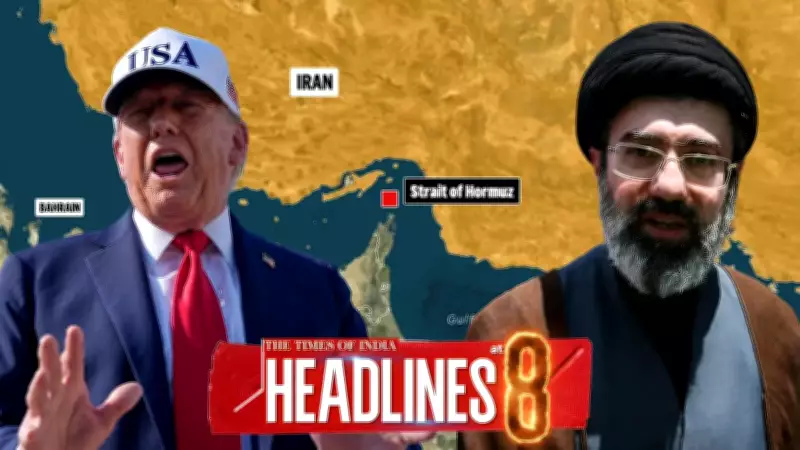
Trump Ready To End Iran War Despite Hormuz Blockade?; Iran’s Oil Revenues Soar Thanks To Trump’s War
After weeks of intense doomsday warnings and escalating military posturing, former President Donald Trump has signaled a sudden and unexpected pivot in the ongoing conflict with Iran. According to recent reports, Trump has informed his close aides that he is "willing to end" the war with Iran, even if the strategically vital Strait of Hormuz remains largely shut down. This development comes amidst a complex backdrop of military actions and growing international diplomatic friction.
Mixed Signals: Escalation and Exit in the Same Breath
The messaging from Trump's camp appears to be sending both escalation and exit signals simultaneously. In a notable instance, Trump reportedly shared a night-time blast video that purportedly shows 900-kg bunker-buster bombs striking a significant ammunition depot in Isfahan. This city is home to key nuclear facilities that have been previously targeted in coordinated US-Israeli strikes. The sharing of such footage suggests a continued aggressive stance, even as verbal indications point towards a potential de-escalation.
This contradictory approach underscores a war footing that is increasingly colliding with mounting logistical and political constraints. The situation highlights the delicate balance between demonstrating military strength and navigating the practical realities of sustained conflict.

Diplomatic Friction and Logistical Challenges Intensify
Adding to the complexity, diplomatic friction is growing as key European allies reportedly deny the United States access to critical military infrastructure. Specifically, Spain and Italy have allegedly refused to allow US aircraft to use their air bases for the ongoing campaign against Iran. This denial represents a significant logistical hurdle, potentially complicating US military operations in the region.
Furthermore, airspace restrictions for US military flights are widening across various parts of Europe. These restrictions further squeeze the operational capabilities of the US military, making it more challenging to sustain a prolonged conflict. The combined effect of these diplomatic and logistical barriers is putting additional pressure on the Trump administration to reconsider its strategic approach.
Iran's Oil Revenues Experience a Surge
In a paradoxical twist, Iran's oil revenues have reportedly soared amidst the conflict, partly attributed to the dynamics of Trump's war. The blockade of the Strait of Hormuz, while intended to pressure Iran, may have inadvertently driven up global oil prices, benefiting Iranian exports through alternative channels or shadow markets. This economic resilience adds another layer to the conflict, suggesting that Iran might be weathering the storm better than anticipated, financially.
The surge in oil revenues could empower Iran to sustain its military and economic posture longer, potentially influencing Trump's calculus towards seeking an exit. It raises questions about the effectiveness of the blockade as a pressure tactic and highlights the unintended consequences of the war.
Conclusion: A War at a Crossroads
The latest developments paint a picture of a conflict at a critical crossroads. Trump's expressed willingness to end the war, despite the ongoing Hormuz blockade, indicates a possible shift towards diplomacy or disengagement. However, the continued military actions and shared footage of strikes reveal an underlying tension and a desire to maintain a position of strength.
With European allies imposing restrictions and Iran's oil revenues climbing, the path forward is fraught with challenges. The coming days will likely reveal whether Trump's signals translate into concrete steps towards peace or if the war will enter a new, more complicated phase. The world watches closely as these geopolitical dynamics unfold, impacting global oil markets and international security.