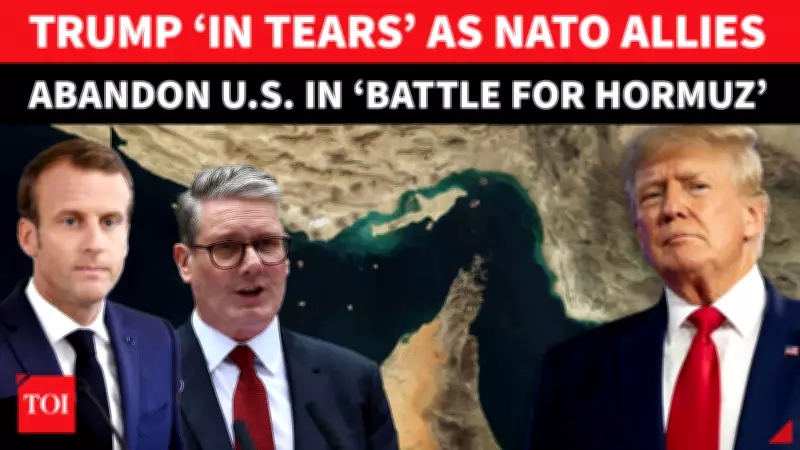
NATO Faces Existential Crisis as Trump Attacks European Allies Over Iran War
Is the North Atlantic Treaty Organization (NATO) approaching a breaking point? Former US President Donald Trump has launched a blistering public attack against key European allies France and the United Kingdom for their refusal to participate in military operations against Iran. The escalating tensions threaten to undermine the fundamental unity of the Western military alliance that has defined global security for decades.
Trump's Truth Social Tirade Against NATO Partners
In a scathing post on his Truth Social platform on Tuesday, Trump specifically targeted France and the United Kingdom, warning that "the USA will remember" their lack of support in the ongoing Iran conflict. This public rebuke of traditional allies represents an unprecedented escalation in diplomatic tensions within NATO and raises serious questions about the alliance's future operational capabilities.
The former president's comments come at a critical juncture as the United States and Israel continue their military offensive against Iran. European nations have shown remarkable unity in their reluctance to engage directly in the conflict, with Italy and Spain joining France and the UK in declining to provide active military assistance to Washington and Tel Aviv.

European Resistance to Military Engagement Grows
The European refusal to participate in the Iran conflict represents more than just a tactical disagreement. It signals a potentially fundamental shift in transatlantic relations and NATO's collective security framework. Multiple European capitals have expressed concerns about:
- Escalation risks of direct military involvement in the Middle East
- Diplomatic consequences for relations with other global powers
- Domestic political pressures against foreign military engagements
- Strategic priorities that may differ from American objectives
Broader Implications for NATO's Future
This public rift between the United States and its European allies comes at a time when NATO is already facing multiple challenges. The alliance has struggled with:
- Burden-sharing debates regarding defense spending
- Strategic disagreements about global priorities
- Political divisions within member states
- External pressures from competing global powers
The current crisis over Iran policy may accelerate existing tensions within the alliance and force a fundamental reevaluation of NATO's purpose and operational parameters in the 21st century.
Regional Conflict Dynamics Continue to Escalate
Meanwhile, the Iran conflict itself shows no signs of de-escalation. Recent reports indicate continued military exchanges, with Iran claiming successful strikes against US-linked facilities in the Gulf region. The Islamic Republic has also announced the dismantling of what it describes as a US-Israeli spy network, with over 130 alleged operatives reportedly apprehended in sweeping security operations.
Iranian officials have remained defiant in the face of American pressure, rejecting calls for negotiations while Trump has threatened severe consequences including potential strikes against Iranian power infrastructure and oil facilities. The situation remains volatile with multiple regional and global powers monitoring developments closely.
The public disagreement between the United States and its European NATO allies represents a significant moment in international relations. As traditional alliances face unprecedented strain, the global security architecture that has prevailed since World War II may be entering a period of profound transformation. The coming weeks will likely determine whether NATO can overcome these divisions or whether the alliance will face its most serious existential crisis since its founding in 1949.