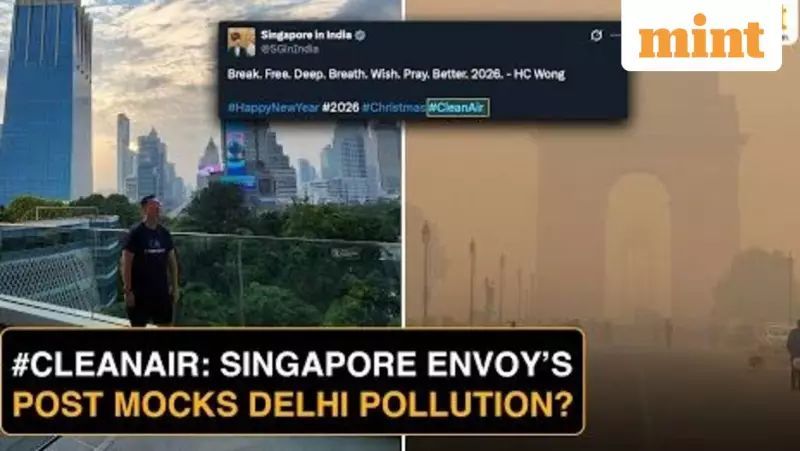
A seemingly innocuous social media post by Singapore's High Commissioner to India, Simon Wong, has ignited a firestorm of criticism and outrage among residents of Delhi. The diplomat's message, which highlighted the clean air in Singapore, was perceived by many as a veiled mockery of the Indian capital's severe and persistent air pollution crisis.
The Post That Sparked Controversy
On December 16, 2025, High Commissioner Simon Wong shared a post on a social media platform. The content centered around the simple act of enjoying clean, fresh air in Singapore. The post included the single-word caption 'Breathe', which was intended to promote appreciation for a pollution-free environment. However, the timing and context were interpreted very differently by a large number of Indian users, particularly those battling the hazardous air quality in Delhi and the broader National Capital Region (NCR).
Immediate Backlash and Accusations of Mockery
The reaction from Indian social media users was swift and severe. Many accused the diplomat of being insensitive and of indirectly mocking the public health emergency faced by millions in Delhi. Users flooded the post's comments section, pointing out the stark contrast between Singapore's air quality and the toxic smog that regularly envelops Delhi, especially during the winter months.

The core of the outrage lay in the perceived tone-deafness of the message. For Delhi residents who routinely deal with school closures, health advisories, and breathing difficulties, the post felt like a privileged taunt rather than a genuine environmental appreciation post. Critics argued that a diplomat in a position of such responsibility should be more aware of local sensitivities, especially concerning a critical issue like air pollution that affects the daily lives of his host country's citizens.
Broader Implications for Diplomatic Discourse
This incident highlights how social media communication by diplomatic figures can quickly escalate into an international talking point. It underscores the need for heightened cultural and contextual awareness in public messaging. While the post was likely not intended as a malicious jab, its reception demonstrates the powerful emotional charge surrounding Delhi's air pollution problem.
The controversy also brings the India-Singapore relations into a subtle, unofficial spotlight, showing how non-political issues can influence public perception between nations. It serves as a reminder that in the digital age, every public statement from a diplomatic envoy is scrutinized not just for its official content, but for its subtext and perceived empathy towards local challenges.
As of now, there has been no official statement or clarification from High Commissioner Wong or the Singaporean mission regarding the social media backlash. The episode remains a vivid example of how environmental crises and diplomatic communication can collide in the public sphere, sparking conversations about responsibility, sensitivity, and the shared global challenge of air quality.