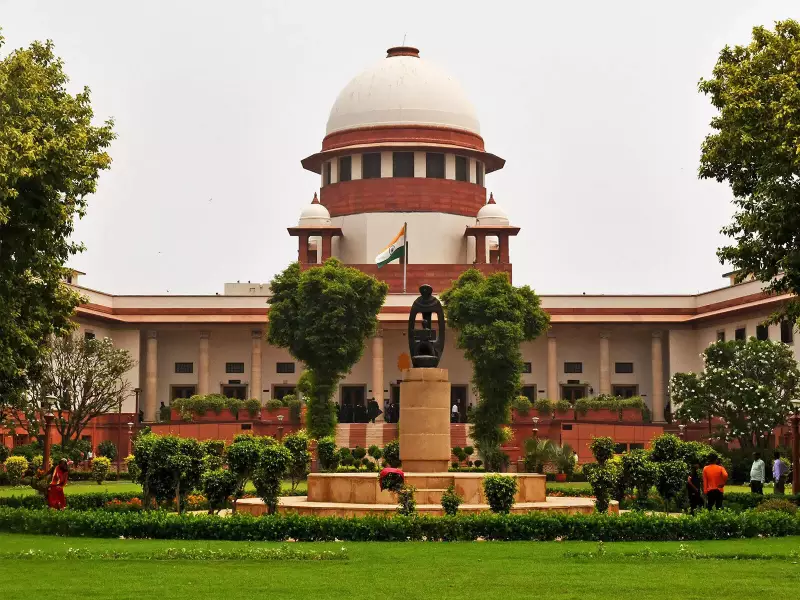
The Supreme Court of India on Monday intervened in a dispute between the Central government and the state of Tamil Nadu regarding the establishment of Jawahar Navodaya Vidyalaya (JNV) schools, urging both sides to avoid turning the matter into a contentious language issue.
Court's Call for Cooperation Over Conflict
A bench comprising Justices BV Nagarathna and R Mahadevan made the significant observation while hearing the Tamil Nadu government's plea. The state was challenging a Madras High Court order that had directed it to facilitate the setting up of JNV schools. Senior counsel P Wilson, representing the DMK-led state government, argued that the Centre should adopt Tamil Nadu's two-language formula, aligning with the state's longstanding policy, rather than enforcing the three-language formula prescribed under the National Education Policy (NEP) 2020.
As the Centre's counsel prepared to counter this argument, the bench proactively urged restraint. Justice Nagarathna explicitly stated, "Don't make it into a language issue. We are a federal society. You are part of the Republic." She emphasized the core concern of the judiciary: ensuring rural students receive quality education. The court clarified that the earlier directions were passed solely in the interest of students entitled to admission in such prestigious institutions.

Focus on Student Welfare and Federal Harmony
The bench pointedly advised the Tamil Nadu government to view the establishment of JNVs as an "opportunity rather than an imposition" for its students. Justice Nagarathna suggested a constructive path forward, noting that the state could formally present its two-language policy to the Central government for consideration. This approach, the court reasoned, would be more productive than a legal sparring match.
In a strong message advocating for cooperative federalism, the court remarked, "You can't have this 'my state, my state' approach. This attitude must go. You come one step forward, they will also come one step forward." The bench reiterated that its primary focus remained on the educational advancement of students, particularly those in rural areas who stand to benefit from the JNV system.
The Underlying Legal Dispute
The hearing stems from the Supreme Court's earlier directive, issued during the same proceedings, asking the Tamil Nadu government to ascertain the extent of land required for establishing the Jawahar Navodaya Vidyalayas. The state's appeal against the Madras High Court order has now become a flashpoint for the broader debate on language policy in education.
The court's intervention seeks to de-escalate the tension, framing the issue not as a clash between state and central authority or between language policies, but as a collaborative project for student welfare. The bench's remarks underscore a judicial preference for dialogue and mutual accommodation between different levels of government in India's federal structure.