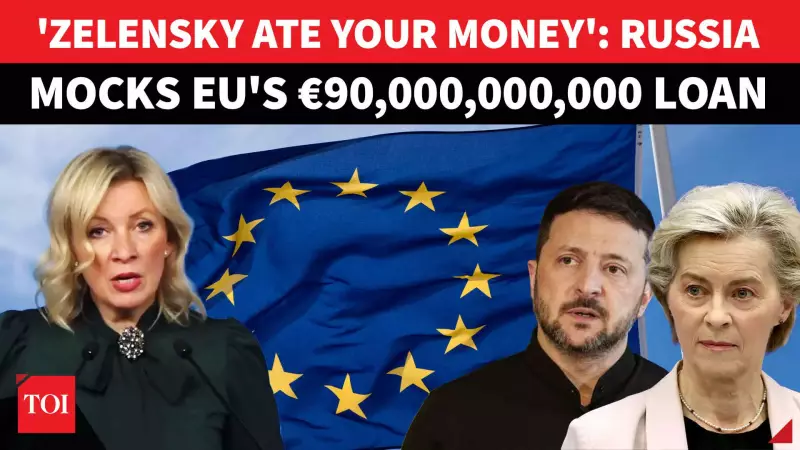
In a sharp escalation of diplomatic rhetoric, Russia has issued a stark warning to the European Union, declaring that the bloc will never recover the enormous financial aid it has sent to Ukraine. The comments came from Russian Foreign Ministry spokesperson Maria Zakharova, who delivered a series of blunt statements targeting European support for Kyiv.
Zakharova's 'Reality Check' on Billions in Aid
Maria Zakharova asserted that the European Union will never see its money returned. She suggested that at best, Europe might gain access to Ukrainian resources or property as compensation, but not the actual cash. This statement serves as a direct challenge to the EU's financial strategy, which includes a recently approved loan package worth a staggering €90 billion to support Ukraine amidst the ongoing conflict.
Zakharova framed this as a 'reality check' for European leaders, accusing them of betting on military escalation over diplomatic solutions. She claimed that citizens across Europe are growing increasingly weary and exhausted by the continuous funding directed to Kyiv. This narrative aims to highlight a potential rift between EU leadership and its public regarding the financial and political costs of the war.

Moscow Accuses EU of an 'Information Vacuum'
Beyond the financial critique, Moscow launched a broader attack on the European political environment. Russian officials accused Europe of being trapped in an "information vacuum" where Russia's perspective on the conflict is deliberately blocked and censored. Zakharova emphasized that the issue is no longer a technical one of communication channels but a fundamental refusal to engage with Moscow's position.
In a significant diplomatic overture mentioned in her remarks, Zakharova stated that Russia is prepared to legally commit to a pact of non-aggression with both NATO and the European Union. She pointed out that similar proposals were sent to Washington and Brussels back in December 2021 but were met with silence, implying the West is not interested in a negotiated security framework.
The Broader Context of Rising Tensions
These statements, made on December 25, 2025, represent a calculated intensification of Russia's war of words. The timing is crucial, following the EU's commitment of substantial new funds. The language used, including references to Ukrainian leadership, is designed to undermine international solidarity with Ukraine and question the long-term sustainability of Western financial support.
The core of Russia's argument rests on two pillars: the alleged futility of Europe's financial investment and the portrayal of European leaders as out of touch with their own citizens. By reiterating its offer for a non-aggression pact, Moscow also seeks to position itself as a party seeking stability, shifting the onus for continued conflict onto NATO and the EU.
The escalation in rhetoric underscores the deepening divide and suggests that the information and diplomatic battle surrounding the Ukraine war will continue to intensify alongside military developments. The EU now faces the dual challenge of managing a costly, long-term support commitment for Ukraine while countering Russia's persistent narrative campaign aimed at eroding European resolve.