

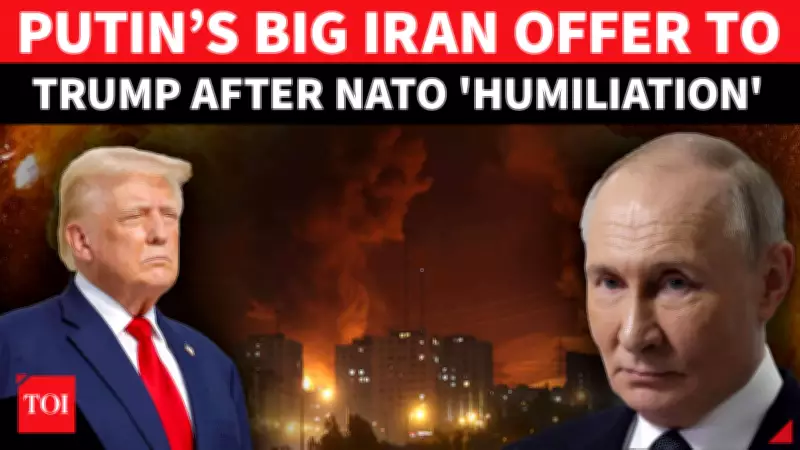
Putin Proposes Mediation Role in Middle East Amid Escalating Tensions
Russian President Vladimir Putin has once again positioned himself as a potential mediator in the ongoing Middle East conflict. During a high-level meeting with Egyptian Foreign Minister Badr Abdelatty in Moscow, Putin expressed his readiness to "do everything possible" to restore normalcy and stability in the region.
Diplomatic Moves Amid Controversial Reports
This diplomatic overture comes at a particularly sensitive time, as multiple intelligence reports indicate Russia has been providing substantial assistance to Iran. According to these reports, Moscow has supplied Tehran with advanced drones, critical technology, and valuable intelligence that Iran has allegedly used to carry out attacks against United States military assets stationed in the Middle East.
The timing of Putin's mediation offer raises significant questions about Russia's strategic intentions in the region. While publicly advocating for peace and stability, evidence suggests Moscow continues to support actors engaged in hostilities against American interests.

Regional Implications and Global Concerns
The situation presents a complex geopolitical puzzle. On one hand, Russia maintains diplomatic channels with multiple Middle Eastern nations, including Egypt, and presents itself as a neutral peace broker. On the other hand, its reported military and technological support for Iran directly contradicts this peacemaking posture and contributes to regional instability.
This dual approach has created growing concerns among Western allies about Russia's long-term objectives in the Middle East. The assistance to Iran, particularly in drone technology and intelligence capabilities, represents a significant escalation that could potentially alter the military balance in the region.
Egypt's Role and Regional Diplomacy
The meeting with Egyptian Foreign Minister Badr Abdelatty underscores Egypt's continued importance as a regional power broker. As a nation with diplomatic ties to multiple conflicting parties in the Middle East, Egypt represents a crucial channel for potential mediation efforts.
Putin's specific choice to make this mediation offer during discussions with Egyptian officials suggests Moscow recognizes Cairo's influential position and may be seeking to leverage Egypt's regional relationships to advance Russian diplomatic initiatives.
Key Developments in the Situation:- Putin's renewed offer to mediate Middle East conflicts comes amid reports of Russian assistance to Iran
- Russia allegedly providing drones, technology, and intelligence to Iran for use against US forces
- The mediation proposal was made during Putin's meeting with Egyptian Foreign Minister Badr Abdelatty
- This creates a contradictory picture of Russia as both peace broker and conflict enabler
- The situation highlights growing complexity in Middle East geopolitics with multiple external actors involved
The evolving dynamics between Russia, Iran, and the United States in the Middle East continue to present significant challenges for regional stability. As diplomatic maneuvers unfold alongside military developments, the international community watches closely to see whether Putin's mediation offer represents genuine peacemaking or strategic positioning in an increasingly volatile region.






