

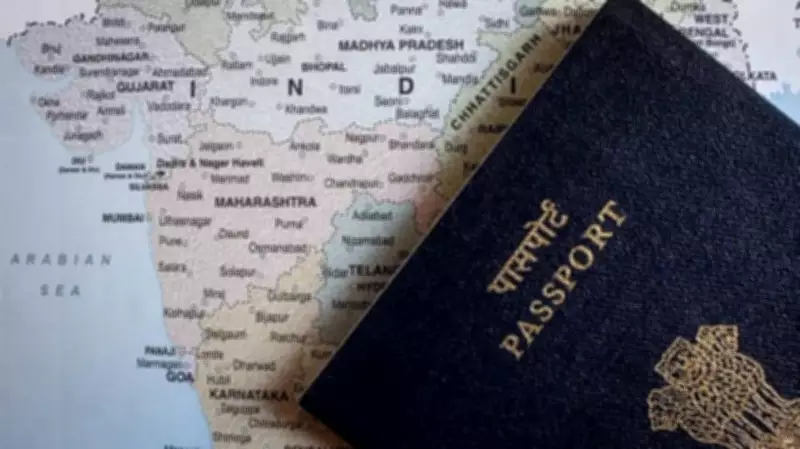
The Ministry of External Affairs (MEA) has clarified that a passport is a travel document and not proof of citizenship, triggering a wave of reactions from political leaders and social media users. The statement, made in response to queries, has raised questions about what documents officially establish Indian citizenship.
MEA's Clarification on Passport Status
The MEA's position, as reported on June 24, 2026, asserts that while a passport is issued to Indian citizens, it serves primarily as a travel document recognized internationally. It does not constitute conclusive proof of citizenship under Indian law. This clarification came amid debates over citizenship documentation.
Shiv Sena (UBT) leader Aaditya Thackeray reacted sharply on social media, posting a series of questions. He asked, "If the MEA believes Passport is not a document of citizenship: 1) What do the police verify before granting a passport? 2) Does our country give passports as travel documents to non Indians as well? 3) Wouldn’t this announcement create doubts in the minds of other countries?"

Public and Political Reactions
Poet and lyricist Javed Akhtar also expressed disbelief, tweeting, "The ministry of external affairs says that a passport is a document travel not the proof of citizenship . Really ??? . So are they providing this travel document to some people with out being totally convinced that this person is an Indian citizen ?? . It is absurd."
Other users echoed similar concerns. Chirag Barjatya questioned, "Genuinely asking, Passport is not a document of Citizenship, Aadhar Card is not a document of Citizenship, Voter ID Card is not a document of citizenship. Then what is the proof?" Parth Chaturvedi directly asked the MEA to confirm what exactly constitutes a document of citizenship, noting that Aadhaar, PAN, and Voter ID are not considered proof.
Legal Framework and Citizenship Proof
Under Indian law, the primary document proving citizenship is the Citizenship Certificate issued under the Citizenship Act, 1955. Other documents like passports, Aadhaar cards, and voter IDs are considered identity documents but not conclusive proof of citizenship. The MEA's statement aligns with this legal distinction, though it has caused confusion among the public.
The Passports Act, 1967, requires applicants to provide evidence of citizenship, but the passport itself does not serve as proof in legal contexts. This has led to calls for clearer guidelines on what constitutes valid citizenship documentation.
Impact and Further Questions
The clarification has sparked debates about the reliability of commonly held documents. Social media users have expressed concern that if passports, Aadhaar cards, and voter IDs are not proof of citizenship, then what is? Some have joked that the only proof might be the location of one's X (formerly Twitter) account.
The MEA has not yet responded to the specific queries raised by Thackeray and others. As of now, the government maintains that the Citizenship Certificate remains the definitive proof, but many Indians rely on passports for international travel and identification. The issue highlights the need for a comprehensive citizenship documentation system.






