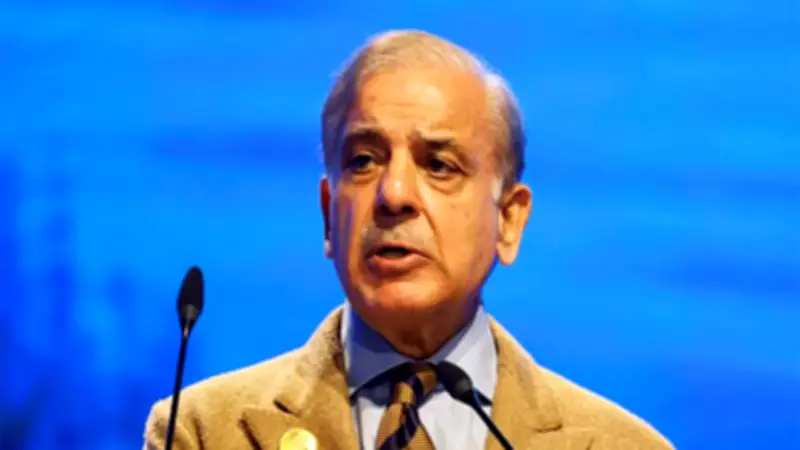
Pakistan Prime Minister Shehbaz Sharif has made a startling revelation about the personal and national humiliation involved in addressing Islamabad's severe debt crisis. In a candid admission, Sharif disclosed that both he and Army Chief Field Marshal Asim Munier were compelled to "quietly" solicit billions of dollars in loans from friendly nations to bridge Pakistan's critical external financing gap.
Humiliating Loan Requests Made in Secret
Addressing a gathering of businessmen and exporters, Sharif expressed gratitude to friendly countries for their support while frankly acknowledging the compromises and lowered self-esteem involved in the process. "We requested friendly countries to grant us loans, and they did not let us down," he stated, as quoted by Pakistani newspaper The Express Tribune.
The prime minister elaborated on the humbling experience: "You know that when countries go to seek loans, their heads are bowed, and you are well aware of the obligations linked to loans. I want to state frankly that the field marshal and I quietly visited many countries and requested them to provide loans worth billions of dollars to help secure the IMF programme and reduce the external financing gap."

The Heavy Price of Foreign Assistance
Sharif emphasized that seeking financial assistance from other nations required complying with what he described as unjustifiable demands. "I am thankful to those friendly countries who hosted us. However, you know that when one seeks money from others, a price has to be paid in the form of lowered self-esteem. Compromises have to be made. One has to bear the burden of the wishes of those who grant loans, despite the fact that there is often no justification for implementing such demands," he explained.
The prime minister specifically noted that China was foremost among the countries that assisted Pakistan during this challenging period, highlighting the strategic partnerships that have become crucial for Islamabad's economic survival.
Historical Context of Pakistan's Loan Dependence
This is not the first time the Pakistani premier has expressed discomfort over seeking international loans. In January 2023, Sharif admitted that it embarrassed him to ask for further financial assistance, despite acknowledging Saudi Arabia's crucial support during previous crises.
Sharif has repeatedly stressed the urgent need for Pakistan to achieve economic self-sufficiency and reduce its dependence on International Monetary Fund programmes, which typically come with strict conditionalities that impact domestic policies and economic sovereignty.
Pakistan's Ongoing IMF Engagement
Over the years, Pakistan has frequently turned to the IMF for financial support, with assistance consistently linked to demanding conditions including:
- Comprehensive fiscal reforms
- Substantial subsidy cuts
- Revenue-enhancing measures
- Structural economic adjustments
In September 2024, the IMF approved a $7 billion bailout for Pakistan under its Extended Fund Facility, followed by an additional $1.4 billion loan under its climate resilience fund in May 2025. These financial packages were specifically aimed at strengthening Pakistan's economic stability while enhancing climate resilience in a nation particularly vulnerable to environmental challenges.
The prime minister's revelations underscore the profound challenges facing Pakistan's economy and the difficult diplomatic maneuvers required to secure international financial support. His admission of secret loan-seeking missions with the country's military leadership highlights the extraordinary measures being taken to address what remains one of South Asia's most pressing economic crises.