

Noida Airport Faces Transport Hurdles as Metro and Direct Buses Remain Years Away
When commercial operations commence at the Noida International Airport, passengers will largely rely on cabs, bike taxis, and private vehicles for transportation. This dependency arises because metro connectivity and direct bus services are still several years from becoming operational, creating significant accessibility challenges for travelers.
Partnerships with Mahindra Logistics and Rapido to Offer Electric and Ride-Sharing Solutions
To address the immediate transport gap, the airport has forged strategic partnerships. It has collaborated with Mahindra Logistics Mobility to deploy a fleet of electric taxis and with the ride-sharing platform Rapido to provide bike taxis and cabs directly from the airport premises. Both services will operate round-the-clock, featuring dedicated pick-up and drop-off points at arrivals and departures areas, ensuring convenience for passengers.
UPSRTC Plans Bus Connectivity to Western UP Districts but Faces Delays
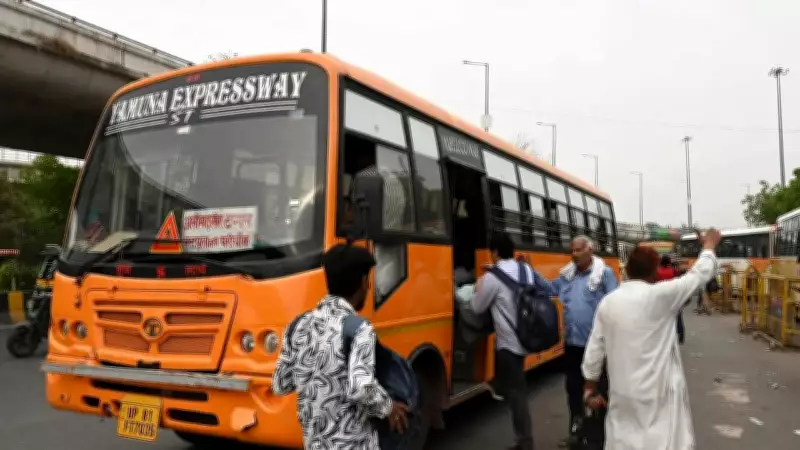
The Uttar Pradesh State Road Transport Corporation (UPSRTC) has announced plans to connect the airport with 17 districts in western Uttar Pradesh, including key cities like Meerut, Aligarh, Agra, and Mathura. There are also considerations for extending services to Gurgaon and Faridabad. UPSRTC regional manager Manoj Kumar stated that dedicated airport services are under exploration, with potential for double-decker buses to link with Jewar based on demand.

In February of last year, the Noida International Airport signed a memorandum of understanding with the Uttarakhand Transport Corporation to launch air-conditioned bus services to destinations such as Dehradun, Rishikesh, Haridwar, and Haldwani. These services are expected to begin concurrently with flight operations.
Stalled City Bus Proposal and Infrastructure Gaps Hinder Public Transport
Three industrial authorities—Noida, Greater Noida, and Yamuna—had initially planned to jointly launch 500 city buses to enhance connectivity. However, this proposal has stalled due to high viability gap funding burdens, infrastructure deficiencies, and delays in forming a Special Purpose Vehicle. Consequently, with no metro link, no direct bus service, and auto-rickshaws prohibited from expressways, reaching the airport remains a persistent problem.
Botanical Garden Hub Highlights Connectivity Disconnect
The disconnect is particularly evident at Botanical Garden, a key interchange connecting the Delhi Metro Rail Corporation's Blue Line and Aqua Line, located approximately 65 kilometres from the airport. Despite its status as the region's primary transit hub, there is no direct bus link to Jewar. Current shuttles and buses only extend as far as Pari Chowk, where passengers must arrange their own onward transport.
Sumit Kumar, a shuttle driver, noted, "We have not received any directions to extend services till Jewar," charging Rs 30 per person for the Botanical Garden-Pari Chowk route. A limited number of UPSRTC buses from Sector 37 pass through Jewar en route to Agra, Aligarh, and Meerut, but residents report that the service is too unreliable for air travelers.
KK Jain, general secretary of the Federation of Noida Residents Welfare Associations, emphasized, "Delays in roadways buses can result in missed flights. Authorities must introduce dedicated bus services."
Auto-Rickshaw Restrictions Compound Last-Mile Challenges
Auto-rickshaws, which serve as a critical last-mile transport option across the city, are barred from the Noida and Yamuna expressways. Violations incur fines of Rs 20,000, further limiting accessibility. Omprakash Gurjar, president of the Noida Auto Union, argued, "In Delhi, autos can go to the airport. Authorities should consider relaxing norms."
The airport is projected to serve a 150-kilometre catchment area spanning 24 districts across Uttar Pradesh, Delhi, Haryana, and Rajasthan. While electric taxis and ride-sharing initiatives offer temporary relief, the absence of robust public transport infrastructure underscores the urgent need for accelerated development of metro and bus services to ensure seamless connectivity for future passengers.






