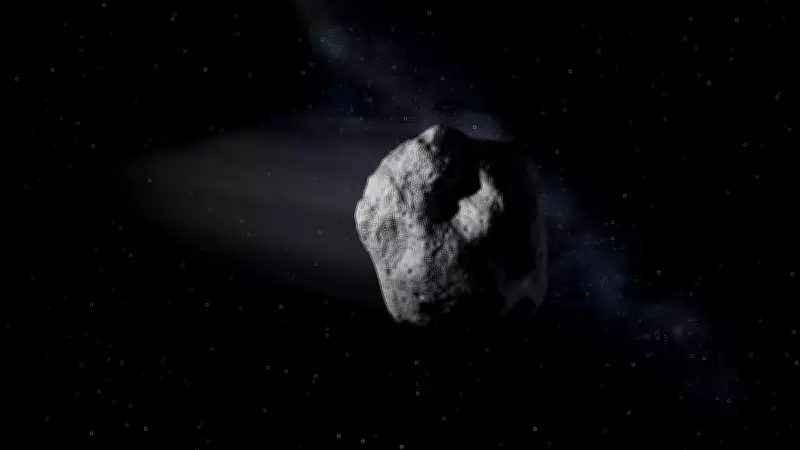
NASA's Webb Telescope Confirms Asteroid 2024 YR4 Will Not Impact Moon in 2032
In a significant development for planetary defense and space science, NASA's James Webb Space Telescope has definitively confirmed that asteroid 2024 YR4 will not collide with the Moon on December 22, 2032. This announcement comes after previous estimates had suggested a small but notable probability of impact, providing crucial reassurance about the safety of Earth's natural satellite.
Eliminating Previous Impact Probability Estimates
According to earlier calculations and observational data, asteroid 2024 YR4 had been assessed with approximately a 4% chance of striking the Moon during its close approach in late 2032. This probability, while relatively low, had raised concerns among astronomers and space agencies due to the potential consequences of such an event. The new findings from the Webb telescope, however, have completely ruled out this possibility through precise tracking and analysis.
The James Webb Space Telescope, with its advanced infrared capabilities and unparalleled resolution, has provided detailed observations that have refined the asteroid's trajectory with unprecedented accuracy. These observations confirm that 2024 YR4 will pass safely by the Moon at a distance that eliminates any risk of collision, effectively reducing the impact probability to zero.

Advanced Observations and Scientific Significance
The confirmation was made possible by the Webb telescope's ability to capture high-resolution images and spectral data of asteroid 2024 YR4. This data has allowed scientists to precisely calculate its orbit, size, composition, and velocity, all of which are critical factors in determining potential impact risks. The asteroid, which was first identified in 2024, has been under continuous monitoring to assess any threats it might pose to celestial bodies in our solar system.
This development highlights the importance of ongoing asteroid tracking efforts and the role of cutting-edge technology like the Webb telescope in enhancing our understanding of near-Earth objects. By accurately predicting the paths of asteroids, scientists can better prepare for and mitigate any future risks, contributing to global planetary defense strategies.
Implications for Future Space Research and Safety
The elimination of the collision threat from asteroid 2024 YR4 has several key implications:
- Enhanced Confidence in Monitoring Systems: The successful use of the Webb telescope demonstrates the effectiveness of modern observational tools in providing reliable data for asteroid risk assessment.
- Reduced Concerns for Lunar Missions: With no impact expected, planned and future lunar explorations, including crewed missions and satellite deployments, can proceed without this specific hazard.
- Contribution to Planetary Defense: This case adds to the growing body of knowledge that helps scientists refine models for predicting and preventing potential asteroid impacts on Earth and other celestial bodies.
NASA and other space agencies continue to monitor thousands of near-Earth objects to ensure early detection of any threats. The findings regarding asteroid 2024 YR4, confirmed on March 6, 2026, serve as a testament to the progress made in space science and the collaborative efforts to safeguard our planet and its cosmic neighborhood.