

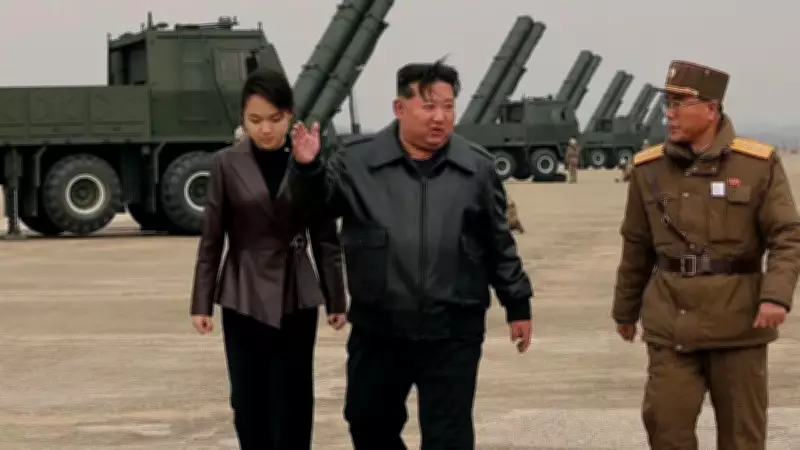
North Korean Leader Kim Jong Un Defends Nuclear Arsenal Amid Iran War Tensions
North Korean leader Kim Jong Un has strongly defended his country's nuclear arsenal, pointing to the ongoing conflict involving Iran as clear evidence of the necessity for robust military deterrence. According to reports from the South Korean state-run Korean Central News Agency (KCNA), Kim made these remarks during a speech to North Korea's Supreme People's Assembly on Tuesday.
Kim Jong Un Accuses United States of Global Aggression
In his address, Kim Jong Un accused the United States of carrying out what he described as "terrorism and invasions" across multiple regions worldwide. While he did not directly mention former US President Donald Trump by name, Kim specifically referenced Washington's ongoing conflict with Iran as a prime example of American aggression.
"Dignity, interest and the final victory of a country can only be guaranteed by the most powerful might," Kim declared, as reported by KCNA. "Whether the enemies choose confrontation or peaceful coexistence, that's their choice, and we are ready to respond to any choice."

North Korea Vows to Strengthen Nuclear Capabilities
The North Korean leader vowed to further advance what he termed his country's "defensive nuclear deterrence" capabilities. He emphasized that Pyongyang would maintain a "prompt and precise" response posture for its nuclear forces to address what he described as strategic threats to both national and regional security.
"North Korea will continue to solidify its status as a nuclear weapons state while aggressively staging campaigns to crush any provocations by hostile forces," Kim added during his comprehensive address to the assembly.
Escalated Rhetoric Against South Korea
In a significant escalation of regional tensions, Kim Jong Un formally declared South Korea to be the "most hostile nation" toward North Korea. The North Korean leader stated that his government would "officially recognize South Korea as the most hostile nation and will thoroughly ignore and disregard it through the clearest remarks and actions."
Kim issued a stern warning to Seoul, threatening "merciless" consequences if South Korea were to provoke Pyongyang in any manner. This represents a notable hardening of North Korea's position toward its southern neighbor amid ongoing regional security concerns.
Trump Claims Iran War Nearing Conclusion
Meanwhile, former US President Donald Trump confirmed that negotiations with Iran were ongoing, claiming that the conflict was approaching its conclusion. "We're in negotiations right now. I can tell you, they'd like to make a deal and who wouldn't if you were there?" Trump stated during recent remarks.
The former president asserted that Iran's military capabilities had been severely degraded, saying "their navy's gone, their air force is gone, their communications are gone. Pretty much everything they have is gone." He added, "I think we are going to end it. I cannot tell you for sure. We have won this... We literally have planes flying over Tehran and other parts of their country."
Iran Denies Negotiation Reports
Despite Trump's claims of ongoing negotiations, Iranian officials have firmly denied reports of any diplomatic talks with the United States. Tehran has insisted that peace would only be possible if both the United States and Israel ended their military campaigns against Iran.
The Middle East remains highly volatile as Iran continues its retaliatory strikes, with reports indicating the conflict has reached what some sources describe as "wave 80" of Iranian countermeasures. This persistent instability in the region appears to have provided Kim Jong Un with what he views as justification for North Korea's nuclear weapons program.

The North Korean leader's explicit linking of the Iran conflict to his country's nuclear policy represents a significant development in Pyongyang's strategic messaging. By framing nuclear weapons as essential for national survival in what he portrays as a dangerous international environment, Kim has reinforced his regime's commitment to maintaining and expanding its nuclear capabilities despite international sanctions and diplomatic pressure.





