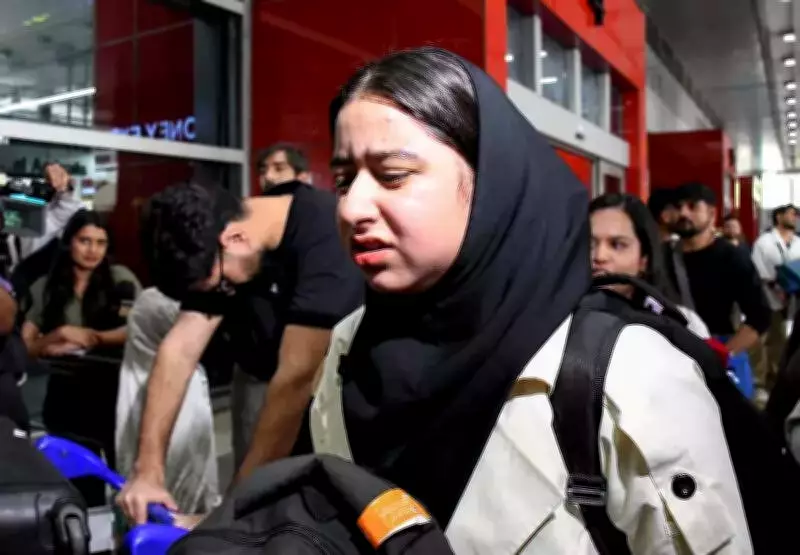
Kashmiri Medical Students Flee Iran Conflict, Arrive in Delhi After Harrowing Journey
In a dramatic turn of events, nearly 70 Indian medical students, predominantly from Kashmir, have safely returned to Delhi after evacuating from Iran, where escalating military tensions have disrupted their studies and daily lives. The group landed at Indira Gandhi International Airport on Sunday, marking the end of a stressful and uncertain period fueled by the ongoing conflict between Israel and Iran.
Anxiety and Relief at Delhi Airport
Relief was palpable on the faces of students and their families gathered outside the international arrivals gate at Terminal 3. Among them was Tahir, a 24-year-old from Kupwara in Jammu and Kashmir, who had moved to Iran in 2022 to pursue an MBBS degree. "Buying a return ticket has always been the norm before travelling home," Tahir explained. "This time, however, I booked a one-way ticket to Delhi due to the emergency situation." He noted that while a typical round-trip flight costs around Rs 25,000, this emergency journey set him back nearly Rs 55,000 for a one-way ticket.
Naina, a 22-year-old final-year medical student from Anantnag, shared her harrowing experience. "The past month was full of anxiety as we waited for communication from our universities and the Indian government," she said. "I could feel the tremors after bombs hit police stations near my hostel. The entire room was shaking." Her account underscores the direct impact of the conflict on civilian areas, including educational institutions.

Logistical Challenges and Financial Burdens
The evacuation process was fraught with challenges. The students reported paying for their own flights, while the Indian government facilitated documentation and travel clearances. Their journey involved multiple stops: they were first moved from Iran to Armenia about four days ago, then flown to Dubai, and finally to New Delhi. "We are incredibly exhausted from the journey. We haven't had a proper meal in four days," lamented a final-year student who wished to remain anonymous.
For those unable to afford flights home, the situation remains precarious. Some classmates have been relocated to Qom, where conditions are relatively calmer than in Tehran. Meanwhile, universities in Iran have suspended classes following a 40-day period of mourning declared after the death of Supreme Leader Ayatollah Ali Khamenei, adding to the academic uncertainty.
Academic and Emotional Dilemmas
The disruption has left students in a state of limbo regarding their education. Sohail Amin, a 23-year-old medical student, highlighted the abrupt halt to their studies. "We were in the middle of our clinical trials, but the moment the conflict began, everything stopped," he said. "In a situation like this, schools and hospitals are usually the first places to shut down because they often become targets."
Despite receiving a general advisory about exams resuming once academic activities restart, there is little clarity on how their degrees will be impacted. This uncertainty is compounded by emotional struggles. With internet services frequently disrupted in Iran, staying in touch with families proved difficult. Adviyah, a 25-year-old student from Budgam, described the dilemma. "We spent nearly three weeks dealing with uncertainty while trying to reassure our families. We didn't know how much to tell them—we wanted to be honest, but we didn't want them to be worried."
Family Concerns and the Journey Home
For families in India, the past few weeks have been deeply unsettling. Mohammad Asim, Tahir's cousin in Delhi who came to receive him at the airport, expressed his relief. "Everything was so uncertain. Our loved ones were stuck there, and all we could do was wait for updates," he said.
Even after reaching Delhi, the journey is not over for many. Home remains around 800 kilometers away, with some students planning to travel overnight to Jammu and Kashmir by bus, while others have arranged domestic flights. Yet, for now, the primary focus is on safety and reuniting with loved ones. This evacuation highlights the broader impact of international conflicts on students abroad and the urgent need for coordinated response efforts.