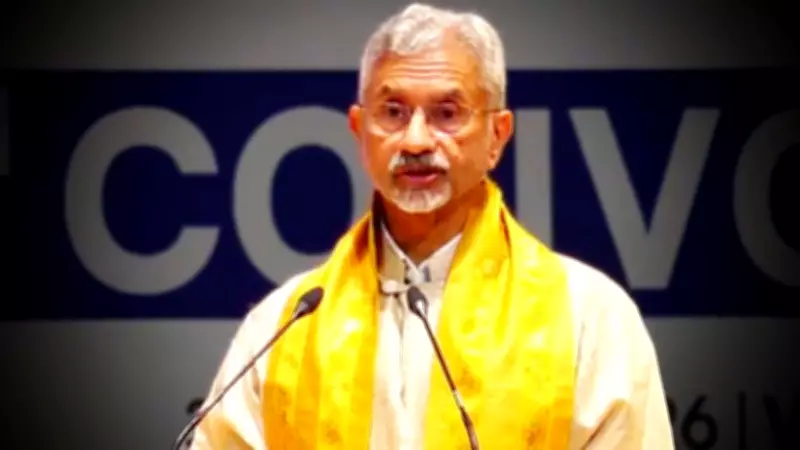
Jaishankar Links Nalanda Revival to India's Strategic Rise in Multipolar World
In a compelling address that connected historical legacy with contemporary geopolitics, External Affairs Minister S. Jaishankar declared that the revival of Nalanda University serves as a powerful symbol of India's and Asia's ascendance in today's increasingly multipolar global landscape. Speaking at the university's convocation ceremony, Jaishankar articulated a vision where the world is decisively moving away from a unipolar power structure dominated by a single nation.
From Ancient Hub to Modern Symbol
Jaishankar emphasized that Nalanda, once a renowned global epicenter of learning and intellectual exchange, now stands as a testament to a broader global transformation. He noted that diverse cultures and civilizations are now assertively reclaiming their rightful places on the world stage. This shift, he argued, is not merely political but deeply rooted in a resurgence of intellectual and cultural confidence.
The minister underscored a critical balance in this new era: while technological advancement remains a primary driver of modern economic growth and geopolitical power, the essential human dimension of knowledge must not be neglected. He warned against an over-reliance on technology at the expense of wisdom, ethics, and the softer aspects of global influence.

International Students as Ambassadors
A significant portion of Jaishankar's speech highlighted the strategic role of international education. He pointed to the presence of students from across the globe at Nalanda as a key mechanism for disseminating India's cultural and intellectual influence worldwide. These students, he suggested, become informal ambassadors, carrying forward India's civilizational values and contemporary insights long after they return to their home countries.
The underlying message was unequivocal: India's rich historical past is far more than a relic to be studied. Jaishankar framed it as a dynamic and potent strategic asset, actively shaping the nation's future trajectory and role in international affairs. The revival of institutions like Nalanda is portrayed not as nostalgia, but as a forward-looking investment in soft power and global leadership.
This perspective positions India's foreign policy as one that leverages its ancient heritage to build modern partnerships and assert its voice in a world where power is becoming more distributed. The convocation speech thus served as both an academic celebration and a clear statement of India's geopolitical intent in an evolving international order.