In a significant diplomatic shift, Lebanon and Israel have, for the first time, included civilian representatives in a meeting of a previously military-only ceasefire monitoring mechanism. This development marks a subtle but notable step in the complex relationship between the two nations, which remain officially in a state of war.
A New Forum for Dialogue at UNIFIL HQ
The talks were convened on Wednesday at the headquarters of the United Nations Interim Force in Lebanon (UNIFIL), located in the southern Lebanese border town of Naqoura. The monitoring mechanism itself was established over a year ago, following the end of the latest conflict between Israel and the Lebanese militant group Hezbollah. The United States, which played a key role in brokering last year's truce, has been pushing for more structured and direct dialogue between the two countries.
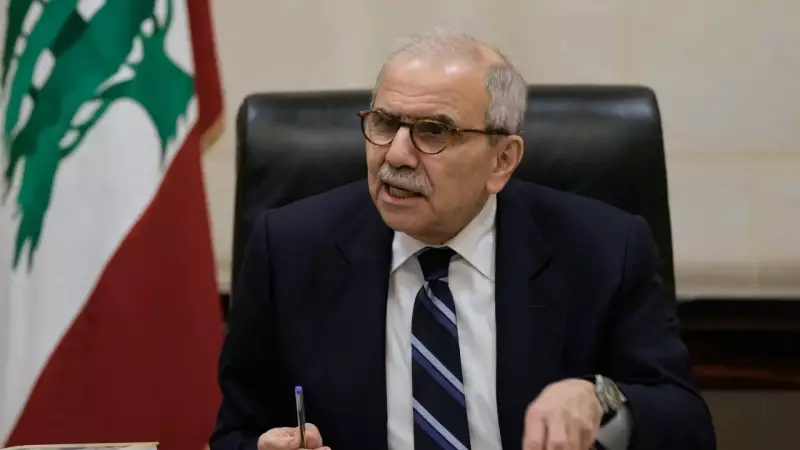
However, leaders on both sides have expressed clear reservations about the pace and scope of any normalization. Lebanon and Israel do not maintain formal diplomatic relations. Lebanese Prime Minister Nawaf Salam emphasized that his country is "far from normalizing ties with Israel" and remains firmly committed to the 2002 Arab Peace Plan. This plan explicitly links the establishment of diplomatic relations with Israel to the creation of a sovereign Palestinian state—a condition that the current Israeli government rejects.

"Economic relations would be part of such normalization, so then obviously anyone following the news would know that we are not there at all," Prime Minister Salam stated, tempering expectations of any immediate breakthrough.
Divergent Views on Progress and Prerequisites
Despite the underlying tensions, the atmosphere in the room was reported as constructive. The office of Israeli Prime Minister Benjamin Netanyahu described the talks as "positive" and noted an agreement "to develop ideas to promote potential economic cooperation between Israel and Lebanon."
This glimmer of optimism was immediately qualified by a stark Israeli precondition. Netanyahu's office added that it was "essential" for Hezbollah to disarm, irrespective of any progress on economic cooperation. This demand strikes at the heart of one of the most intractable issues in Lebanese politics and regional security.
The Central Stumbling Block: Hezbollah's Arms
The Lebanese government has, in principle, committed to disarming Hezbollah, beginning in the south where the group's influence is strongest. Hezbollah, however, whose military wing is designated as a terrorist organization by several nations including the U.S., has repeatedly stated it will not consider full disarmament until Israel withdraws from all Lebanese territory and ceases its attacks.
Israel maintains that its nearly daily airstrikes in southern Lebanon are defensive, aimed at preventing Hezbollah from rebuilding its military capabilities and planning new operations against Israel. This cycle of action and reaction fuels continuous tension along the border, known as the Blue Line.
Many in Lebanon now fear that Israel, frustrated by the slow progress on disarming Hezbollah, may resume a full-scale military campaign. This looming threat underscores the fragile nature of the current ceasefire and adds urgency to diplomatic efforts, even as the fundamental disagreements remain unresolved. The inaugural civilian meeting, therefore, represents a cautious probe for common ground in a landscape dominated by decades of distrust and conflict.