Islamic Diplomacy Experiences Unexpected Revival Amid Regional Conflicts
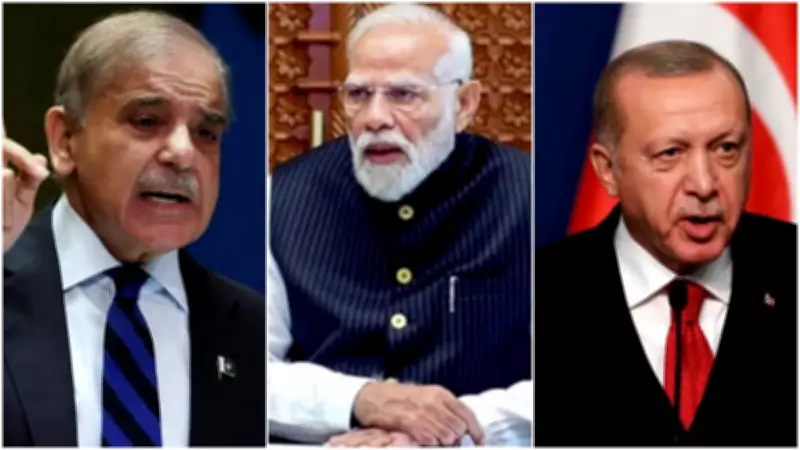
The ongoing conflict in Iran has triggered a surprising resurgence of Islamic diplomacy across the Middle East and surrounding regions. This development has placed countries like Türkiye and Pakistan at the forefront of new peace initiatives, while traditional regional players like India find themselves increasingly marginalized from these diplomatic processes.
Türkiye's Strategic Pivot Reshapes Regional Dynamics
Observers note that Türkiye has executed a significant diplomatic pivot in recent months, positioning itself as a key mediator in multiple regional disputes. This strategic repositioning represents a departure from previous foreign policy approaches and demonstrates Ankara's growing ambition to lead Islamic diplomatic efforts. The Turkish government has been actively engaging with various stakeholders in the Iran conflict, proposing confidence-building measures and facilitating backchannel communications between conflicting parties.
This diplomatic offensive has expanded beyond the immediate Iran situation, with Türkiye now involved in peace initiatives across multiple theaters. Analysts suggest that President Recep Tayyip Erdoğan's administration views this as an opportunity to solidify Türkiye's position as a regional power broker while advancing its strategic interests. The country's unique geographical position, straddling Europe and Asia, combined with its historical Ottoman legacy, provides Ankara with distinctive credentials in Islamic diplomatic circles.

Pakistan Emerges as Crucial Mediation Power
Simultaneously, Pakistan has dramatically increased its mediation efforts, leveraging its relationships with various Middle Eastern nations to facilitate dialogue. Islamabad's diplomatic corps has been particularly active in shuttle diplomacy between Iran and its neighbors, drawing on Pakistan's historical ties and cultural affinities with multiple parties in the region.
"Pakistan's mediation represents a significant evolution in its foreign policy," notes regional analyst K P Nayar. "Traditionally focused on its immediate neighborhood and relationship with India, Islamabad is now projecting influence much further afield, capitalizing on the vacuum created by Western diplomatic fatigue and regional power shifts."
The Pakistani approach emphasizes:
- Confidential backchannel negotiations that avoid public posturing
- Utilization of religious and cultural common ground as diplomatic tools
- Gradual confidence-building measures rather than immediate comprehensive solutions
- Coordination with other Islamic nations to present unified diplomatic fronts
India's Diminished Regional Role Raises Strategic Concerns
Perhaps the most significant consequence of this diplomatic realignment has been India's apparent sidelining from key regional processes. Despite New Delhi's substantial economic interests and historical connections to the Middle East, India has found itself largely excluded from the emerging Islamic diplomatic networks centered around Türkiye and Pakistan.
This development raises important strategic questions for Indian foreign policy makers. With Türkiye and Pakistan driving peace initiatives that could reshape regional alliances and economic corridors, India risks losing influence in areas critical to its energy security and geopolitical positioning. The situation is particularly concerning given India's traditional role as a balancing power in the region and its aspirations for greater global diplomatic leadership.
Several factors contribute to India's current diplomatic predicament:

- Limited cultural and religious affinity with the predominantly Islamic diplomatic initiatives
- Historical tensions with Pakistan that complicate multilateral engagement
- A foreign policy approach that has traditionally prioritized bilateral over multilateral Islamic diplomacy
- Competing strategic priorities that have diverted diplomatic resources to other regions
Broader Implications for Global Diplomacy
The revival of Islamic diplomacy led by Türkiye and Pakistan represents more than just a regional development. It signals a potential shift in how diplomatic initiatives are structured in conflict zones where Western mediation has faced limitations or outright rejection. This model emphasizes:
Cultural and religious commonality as diplomatic currency, regional leadership rather than great power domination, and incremental progress through sustained engagement rather than grand diplomatic settlements.
As the Iran conflict continues to evolve, the effectiveness of these Türkiye and Pakistan-led initiatives will likely determine whether Islamic diplomacy becomes a permanent feature of the international diplomatic landscape or remains a temporary phenomenon tied to specific regional circumstances. What remains clear is that the diplomatic map of the Middle East and surrounding regions is being redrawn, with traditional power dynamics undergoing significant transformation.