

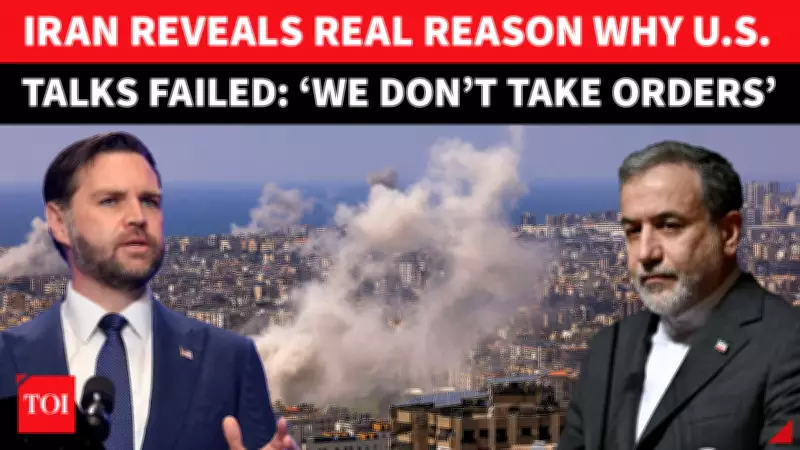
Iranian Official Accuses US of Derailing Crucial Islamabad Negotiations
A sharp diplomatic confrontation has erupted following the collapse of high-stakes talks between Iran and the United States in Islamabad. Former Iranian Foreign Minister Mohammad Javad Zarif has launched a blistering critique, accusing Washington of sabotaging the negotiations by imposing what he termed "unacceptable and one-sided terms."
Zarif's Sovereignty Argument Versus Vance's Final Offer Claim
In a pointed response to US Senator JD Vance, Zarif asserted that the talks failed primarily because the United States expected Tehran to capitulate to its demands without compromise. "The United States does not call the shots in international diplomacy," Zarif declared, framing the dispute as a fundamental issue of national sovereignty. He emphasized that Iran would not bow to external pressure, particularly on matters concerning its nuclear program and regional security policies.
Senator Vance, however, presented a contrasting narrative. He maintained that Iran had rejected what Washington considered a "final and best offer" regarding nuclear commitments and verification measures. According to Vance, this proposal included specific guarantees aimed at preventing nuclear proliferation while offering economic incentives, but Iranian negotiators walked away from the table.

Deepening Divide Stalls Diplomatic Progress
The breakdown highlights a profound and persistent divide between the two nations. The United States has consistently demanded ironclad guarantees on Iran's nuclear activities, coupled with strict monitoring mechanisms. Meanwhile, Iran portrays these demands as infringements on its sovereign rights, arguing that Washington seeks to dictate terms rather than engage in genuine dialogue.
This stalemate leaves international diplomacy at an impasse once again, with no clear path forward for resuming negotiations. The failure in Islamabad underscores the challenges of bridging gaps on issues ranging from uranium enrichment levels to sanctions relief and regional security concerns.
Broader Implications for Regional Stability
The collapsed talks occur against a backdrop of heightened regional tensions. Recent incidents, including drone strikes near Baghdad Airport targeting areas close to US diplomatic convoys and Hezbollah's military engagements, further complicate the geopolitical landscape. Iran has repeatedly warned of forceful responses to perceived provocations, particularly concerning the strategic Strait of Hormuz.
Analysts suggest that without a diplomatic breakthrough, the risk of escalation remains significant. Both sides appear entrenched in their positions, with Iran flexing its regional influence and the US maintaining pressure through military deployments and economic sanctions.
The Islamabad episode serves as a stark reminder of the fragile nature of Iran-US relations, where mutual distrust and conflicting priorities continue to hinder meaningful progress. As both nations assess their next moves, the international community watches closely, hoping for renewed dialogue but preparing for continued deadlock.






