Iran-US Negotiations in Islamabad End Without Breakthrough
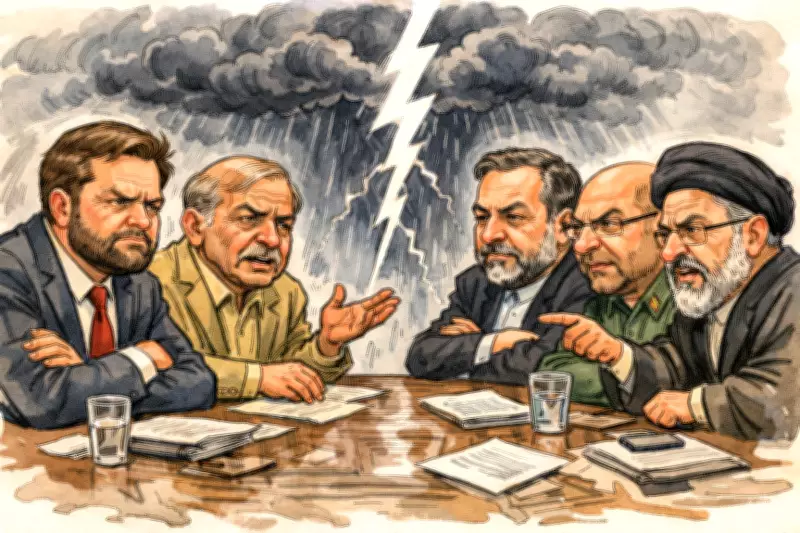
The much-anticipated direct negotiations between Iran and the United States, held in Islamabad, Pakistan, have concluded in a stalemate after nearly 21 hours of intense deliberations. This failure exposes deep-rooted strategic divides and casts significant uncertainty over a fragile ceasefire that had briefly paused a six-week-long conflict. Billed as a rare diplomatic opening—the first direct engagement between Washington and Tehran in over a decade—the talks instead ended with both sides walking away and blaming each other for the collapse.
Core Issues and Sticking Points
The negotiations, which took place on April 11–12 in Pakistan’s capital, were seen as a last-ditch effort to stabilize a conflict that has already resulted in thousands of casualties, disrupted global energy markets, and heightened fears of a wider regional war. Despite marathon discussions and active mediation by Pakistan’s top leadership, the two sides failed to bridge differences on core issues, particularly Iran’s nuclear programme and control over the Strait of Hormuz.
At the center of the negotiations was US Vice President JD Vance, who led the American delegation. Emerging from the talks, Vance struck a firm tone, stating, “The bad news is that we have not reached an agreement, and I think that's bad news for Iran much more than it's bad news for the United States of America.” His remarks reflected a broader US position that the burden of compromise lay primarily with Iran. Vance repeatedly stressed that Washington had drawn clear “red lines”—especially on nuclear issues—and that Tehran had refused to accept them.

Nuclear Impasse and Iranian Pushback
The central sticking point was Iran’s nuclear programme, a decades-long source of tension. According to Vance, the US demanded a long-term, verifiable commitment from Iran not to pursue nuclear weapons, seeking a permanent guarantee rather than temporary assurances. However, Iran has consistently maintained that its nuclear programme is peaceful and that it retains the right to enrich uranium under international law. Iranian officials reportedly offered limited concessions, such as temporary suspensions, but stopped short of permanently dismantling their capabilities.
Iran’s response was sharp, with officials describing US demands as “excessive” and unrealistic. Iranian foreign ministry spokesperson Esmaeil Baqaei emphasized on social media that success depends on “the seriousness and good faith of the opposing side, refraining from excessive demands and unlawful requests, and the acceptance of Iran's legitimate rights and interests.” Discussions covered contentious issues including the Strait of Hormuz, nuclear matters, war reparations, sanctions relief, and ending regional hostilities.
Strait of Hormuz and Geopolitical Tensions
Beyond nuclear concerns, control over the Strait of Hormuz emerged as another major fault line. This narrow waterway, through which roughly 20% of global oil supplies pass, has been blocked by Iran since the conflict began, causing spikes in oil prices. During the talks, Iran reportedly demanded greater control, including transit fees, which the US found unacceptable due to its strategic priority of ensuring free navigation. Interestingly, some movement was observed during the ceasefire, with three supertankers passing through, but hundreds of vessels remain stranded.
Pakistan’s Mediation and Broader Context
Pakistan facilitated the talks, with Prime Minister Shehbaz Sharif, Foreign Minister Ishaq Dar, and military chief Field Marshal Asim Munir playing key roles. Dar urged parties to uphold the ceasefire and expressed hope for future dialogue, while Vance acknowledged Pakistan’s efforts. However, the outcome highlights the limitations of third-party mediation when existential strategic concerns are at stake.
The negotiations occurred against the backdrop of a devastating conflict that began on February 28 with US and Israeli airstrikes on Iran. A two-week ceasefire is now at risk, and complicating matters is the ongoing conflict in Lebanon, where Israel targets Iran-backed Hezbollah militants. Iran insists any agreement must include a ceasefire in Lebanon, a demand rejected by Israel.

Strategic Stalemate and Future Risks
Both sides appear to believe they are negotiating from a position of strength. The US views its extensive military campaign—involving over 13,000 strikes—as evidence of dominance, while Iran frames enduring the assault without capitulation as a victory. This mutual perception reduces compromise incentives.
China’s silent influence also looms large, with its close ties to Iran and role as a potential alternative power broker possibly encouraging resistance to US demands. Looking ahead, options are limited and risks are rising. The Trump administration must choose between resuming military operations, pursuing prolonged negotiations, or accepting a partial agreement, each with significant downsides. For Iran, resisting US demands may preserve autonomy but risks further isolation and pressure.
The collapse of these talks represents more than a failed negotiation; it reflects deep structural tensions and a lack of trust that cannot be resolved quickly. With the ceasefire ticking down and global stakes escalating, this failure may mark a turning point toward prolonged uncertainty, with China’s presence shaping the conflict’s global implications.