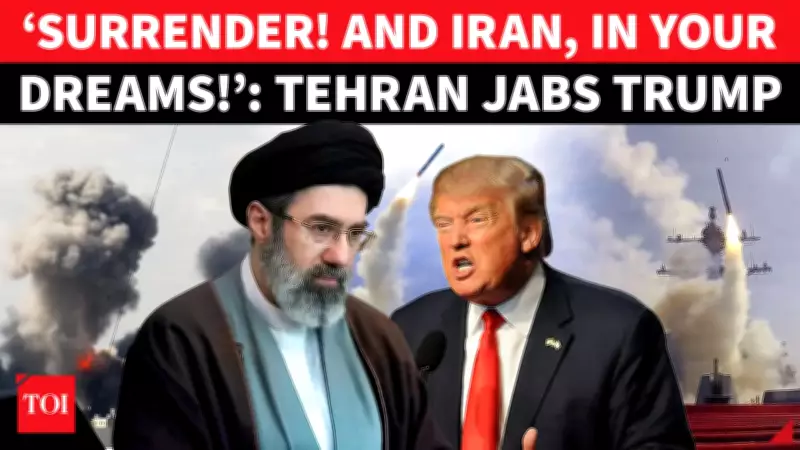
Iran Mocks US 'Delusions' and Refuses Negotiations Over Strait of Hormuz
In a bold and defiant stance, Iran has openly mocked the United States, particularly targeting former President Donald Trump, over what it calls 'delusions' of forcing Tehran to surrender in negotiations. The focus of this escalating tension is the strategic Strait of Hormuz, a vital waterway through which approximately one-fifth of the world's oil trade flows. Iran has declared that it will not engage in diplomatic talks with the US while the naval situation remains unstable and its coastline is under blockade.
Strait of Hormuz: A Central Bargaining Chip in Global Politics
The Strait of Hormuz is not just a geographical feature but a central bargaining chip in Iran's foreign policy strategy. Recent clashes around this waterway, including incidents of ship seizures and gunfire, have threatened to unravel a fragile ceasefire that has been in place. These developments have heightened global energy risks, as any disruption in this artery could lead to significant spikes in oil prices and supply chain issues worldwide. With commercial traffic already experiencing disruptions, the stakes are incredibly high for international markets and security.
Iran's Conditions for Diplomatic Engagement
Iran's leadership has laid out clear conditions for any serious diplomatic engagement with the United States. They insist that freedom of navigation must be secured without any preconditions before talks can proceed. This demand underscores Tehran's perception that the US is attempting to use the unstable naval situation as leverage to force concessions. By taking this hardline position, Iran aims to assert its sovereignty and control over the strait, viewing it as a non-negotiable aspect of its national security and economic interests.

Escalating Tensions and Global Implications
The tensions between Iran and the US have been spiking, with both sides engaging in provocative actions. Iran's mocking rhetoric, as seen in statements like 'Mr. Trump Think We'll Surrender', reflects a broader strategy to resist external pressure and maintain its geopolitical stance. This situation has drawn international concern, as it risks escalating into a broader conflict that could destabilize the Middle East and impact global energy supplies. The deployment of military assets, such as the USS Gerald R. Ford to the region, adds to the volatility, with fears of surprise attacks if diplomatic efforts fail.
Broader Context and Regional Dynamics
Beyond the immediate US-Iran standoff, this crisis intersects with regional dynamics and international diplomacy. Russia has urged both parties to pursue a diplomatic path, highlighting the unpredictable nature of the situation. Meanwhile, Iran has been flexing its military capabilities, including new missiles, which has caused panic in Washington and put US troops in the Gulf on high alert. The involvement of other actors, such as Israel and Lebanon, further complicates the landscape, with incidents like attacks on Israeli troops adding to the turmoil.
In summary, Iran's defiant stance over the Strait of Hormuz represents a critical juncture in US-Iran relations. By mocking US 'delusions' and refusing to negotiate under current conditions, Tehran is playing a high-stakes game that could have far-reaching consequences for global peace and energy security. The world watches closely as diplomatic efforts hang in the balance, with the potential for escalation looming large.