

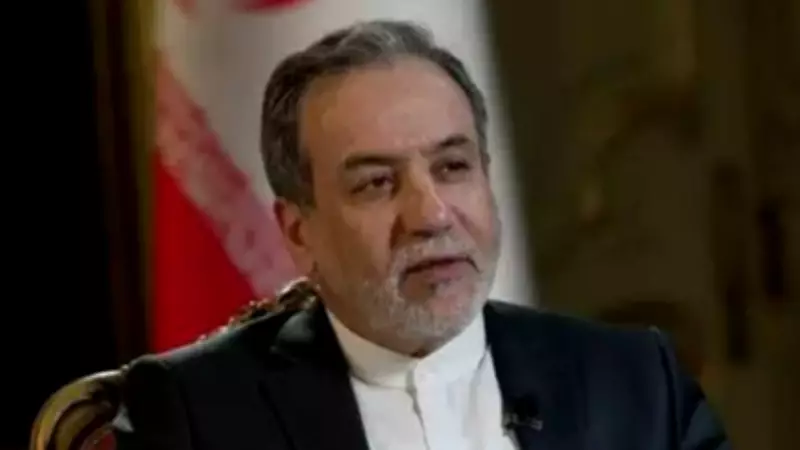
Iran's Top Diplomat Lambasts US War Communication as Modern 'Five O'Clock Follies'
In a scathing critique of American diplomatic rhetoric, Iran's Foreign Minister Seyed Abbas Araghchi has launched a blistering comparison between current United States messaging on the ongoing regional conflict and the notoriously discredited briefings from the Vietnam War era. The senior Iranian official took to social media platform X on Friday to deliver his pointed remarks, which have ignited fresh debate about transparency in international conflict reporting.
Historical Parallels Drawn to Vietnam War Propaganda
Drawing direct historical parallels, Araghchi referenced the infamous "Five O'Clock Follies"—the daily military briefings during the Vietnam War that became synonymous with misleading optimism and detachment from battlefield realities. "Americans haven't forgotten how, even as hundreds of US soldiers were dying in Vietnam, and the outcome was already clear, General William Westmoreland was flown home to reassure everyone that the war was going well—that the US was 'winning,'" Araghchi wrote in his social media post.
The Iranian diplomat emphasized that media institutions worldwide still remember those "briefings full of fantasy from the frontlines" that earned their notorious nickname. He argued that contemporary US communication strategies follow an eerily similar pattern of presenting an overly optimistic narrative that diverges significantly from actual events on the ground.

Current Conflict Messaging Under Scrutiny
Araghchi asserted that Washington's current approach to conflict communication represents "same script, different stage," suggesting that while the geopolitical theater has changed, the fundamental disconnect between official statements and reality persists. The foreign minister specifically criticized what he characterized as a pattern of contradictory messaging, pointing to several recent developments that he claims undermine American assertions of military dominance in the region.
"US government says one thing, reality says another," Araghchi summarized in his social media commentary. He highlighted specific incidents that he believes contradict official US narratives, including reports of an F-35 aircraft being struck despite American claims about the effectiveness of Iranian air defenses. Additionally, he referenced naval movements involving the USS Gerald Ford and USS Abraham Lincoln that he interprets as evidence of a more complex military situation than portrayed in Washington's public statements.
Broader Implications for International Diplomacy
The Iranian foreign minister's remarks come amid heightened tensions in the Middle East and represent a significant diplomatic challenge to American credibility in conflict reporting. By invoking the Vietnam War comparison—a conflict that remains deeply controversial in American historical memory—Araghchi has positioned Iran's critique within a broader narrative about the reliability of superpower military assessments.
This diplomatic exchange underscores the increasingly information-focused nature of modern conflicts, where narrative control and messaging have become as strategically important as military maneuvers. The comparison to Vietnam-era briefings particularly resonates because those communications eventually became emblematic of the "credibility gap" that undermined public trust in government institutions during that period.
The timing of Araghchi's comments coincides with ongoing regional developments, though the foreign minister's primary focus remained on the communication strategy rather than specific battlefield claims. His intervention adds another layer to the complex information warfare accompanying physical conflicts in the region, where competing narratives about military successes and setbacks have become standard elements of diplomatic engagement.
As international observers monitor these exchanges, the Iranian diplomat's invocation of Vietnam-era communication failures serves as a potent reminder of how historical precedents continue to shape contemporary diplomatic discourse and public perception of conflict reporting accuracy.






