Iran Postpones Successor Decision for Slain Supreme Leader Amid Security Threats
In a significant development, Iran has officially delayed the crucial process of naming a successor to its assassinated supreme leader, Ayatollah Ali Khamenei. This decision comes directly in response to mounting security concerns following explicit threats from both American and Israeli officials, who have openly stated that any new leader appointed by Tehran could become a legitimate target for elimination.
Heightened Security Fears Following Direct Threats
According to two senior Iranian officials who spoke on condition of anonymity due to the sensitive nature of the matter, the decision to postpone the succession was driven by genuine fears for the safety of potential candidates. These concerns escalated dramatically after media reports began circulating that identified specific individuals as likely successors, drawing immediate and forceful responses from Washington and Tel Aviv.
"Once Khamenei's name began to circulate as the favoured candidate to succeed his father, the US said he would not be acceptable and could be eliminated," revealed one of the officials, highlighting the direct connection between public speculation and international threats.

Mojtaba Khamenei Emerges as Leading Contender
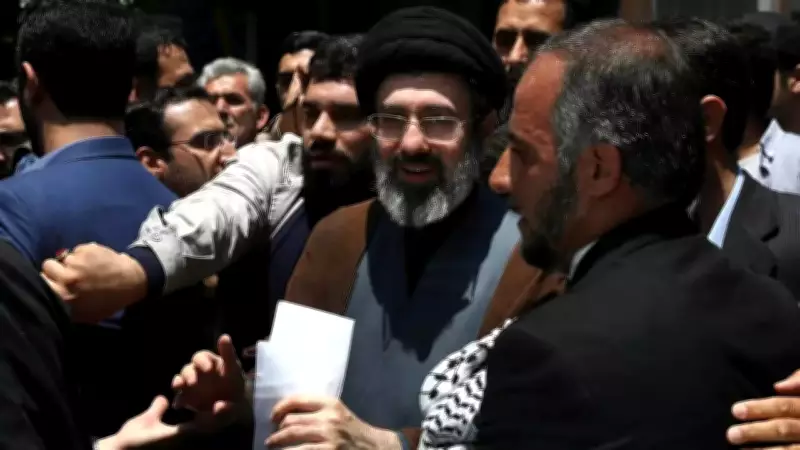
Ayatollah Khamenei's 56-year-old son, Mojtaba Khamenei, has emerged as a prominent frontrunner for the powerful position of supreme leader. However, his candidacy has been overshadowed by serious security apprehensions that intensified following international media coverage identifying him as the potential new face of the Islamic Republic.
The younger Khamenei represents a figure of continuity within Iran's conservative establishment. As a mysterious yet influential personality who has traditionally operated behind the scenes of power, he maintains particularly close ties with the formidable Islamic Revolutionary Guard Corps (IRGC), Iran's most powerful military and security organization.
Unambiguous Threats from US and Israeli Leadership
The security landscape surrounding Iran's leadership transition has been fundamentally altered by unequivocal statements from American and Israeli authorities. Former US President Donald Trump delivered particularly blunt remarks to Axios, dismissing Mojtaba Khamenei as "a lightweight" and "an unacceptable" choice while warning that "they are wasting their time" with his potential appointment.
Simultaneously, Israel's Defence Minister Israel Katz issued an even more direct threat through social media, declaring that any leader appointed by Iran to succeed Khamenei would be "an unequivocal target for elimination." These statements represent an unprecedented level of explicit threat against Iran's future leadership.
Context of Recent Attacks and Political Continuity
The current succession crisis unfolds against a backdrop of recent military actions that have already decimated Iran's leadership structure. American and Israeli strikes have successfully eliminated Ayatollah Ali Khamenei along with numerous top military commanders and key defence figures, though notably sparing religious clerics from direct targeting.
Interestingly, Iran's three main branches of government—the presidency, judiciary, and parliament—remain intact with their leaders still in position. This creates a complex political environment where the supreme leader's role as the ultimate religious, political, and military authority becomes even more critical for maintaining the nation's hard-line conservative governance structure.
The appointment of Mojtaba Khamenei would signal a clear commitment to continuing his father's ideological legacy and policy direction. However, the very public threats from Iran's foremost adversaries have now introduced a dangerous new variable into what was already a delicate transition of power, forcing Tehran to prioritize security considerations over political expediency in determining its future leadership.