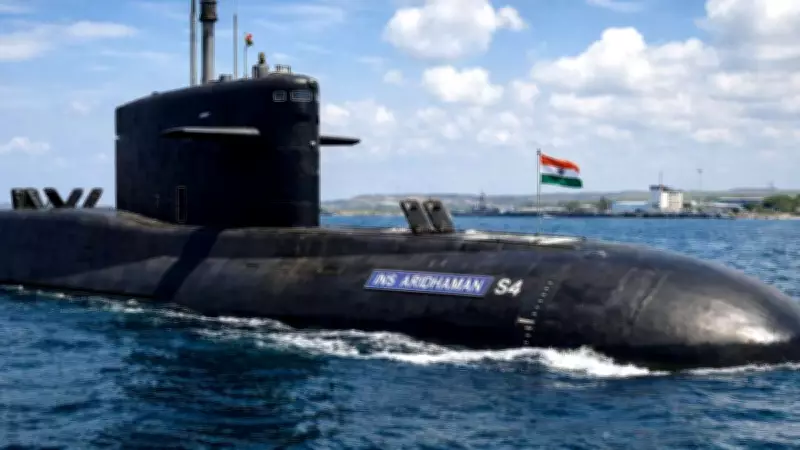
INS Aridaman: India's Third Nuclear-Powered Submarine Commissioned into Indian Navy
In a significant boost to India's maritime defense capabilities, the Indian Navy has officially commissioned INS Aridaman, its third nuclear-powered ballistic missile submarine (SSBN). This milestone event marks a crucial step forward in strengthening the nation's strategic deterrence posture, particularly in the volatile Indian Ocean region.
Enhancing Naval Deterrence and Strategic Depth
The commissioning of INS Aridaman represents a pivotal advancement in India's naval arsenal. As a nuclear-powered submarine, it offers unparalleled endurance and stealth, capable of remaining submerged for extended periods without the need for frequent refueling. This capability is essential for maintaining a credible second-strike nuclear deterrent, a cornerstone of India's defense policy aimed at ensuring national security against potential threats.
Equipped with advanced ballistic missile systems, INS Aridaman can launch nuclear-tipped missiles from underwater, providing a formidable and survivable platform for strategic strikes. This enhances India's ability to project power and safeguard its maritime interests, from securing sea lanes to countering regional adversaries.

Technical Specifications and Operational Significance
INS Aridaman is part of the Arihant-class submarines, which are indigenously designed and built under India's secretive Advanced Technology Vessel (ATV) project. Key features include:
- Nuclear Propulsion: Powered by a compact pressurised water reactor, enabling long-duration patrols and reduced detectability.
- Ballistic Missile Capability: Armed with submarine-launched ballistic missiles (SLBMs) that can target strategic locations with high precision.
- Stealth Technology: Incorporates noise-reduction measures and advanced sonar systems to evade enemy detection.
- Crew and Endurance: Designed to accommodate a crew of approximately 100 personnel, with operational endurance spanning several months.
The submarine's commissioning underscores India's growing prowess in indigenous defense manufacturing, reducing reliance on foreign imports and fostering self-reliance in critical military technologies.
Strategic Implications for Regional Security
The addition of INS Aridaman to the Indian Navy's fleet has profound implications for regional security dynamics. In the context of increasing maritime tensions and the presence of nuclear-armed neighbors, this development bolsters India's position as a dominant naval power in the Indian Ocean. It serves as a deterrent against aggression, ensuring stability and peace in a region fraught with geopolitical challenges.
Moreover, INS Aridaman complements India's broader defense strategy, which includes enhancing tri-service coordination and integrating advanced technologies. This aligns with national objectives to secure maritime borders and contribute to global non-proliferation efforts through responsible nuclear stewardship.
Future Prospects and Naval Modernization
With INS Aridaman now operational, India plans to further expand its SSBN fleet, with additional submarines under construction. This ongoing modernization aims to achieve a robust nuclear triad—comprising land, air, and sea-based delivery systems—ensuring comprehensive defense coverage.
The Indian Navy continues to invest in research and development, focusing on next-generation submarines with improved capabilities. Initiatives include upgrading missile ranges, enhancing stealth features, and incorporating artificial intelligence for autonomous operations, positioning India at the forefront of naval innovation.
In summary, the commissioning of INS Aridaman is a landmark achievement for India's defense sector, reinforcing its commitment to maritime security and strategic autonomy. As global threats evolve, such advancements are crucial for maintaining a balance of power and safeguarding national interests in an increasingly complex security environment.