India's Top Defence Official Issues Stark Warning on Pakistan's Post-Conflict Transformation
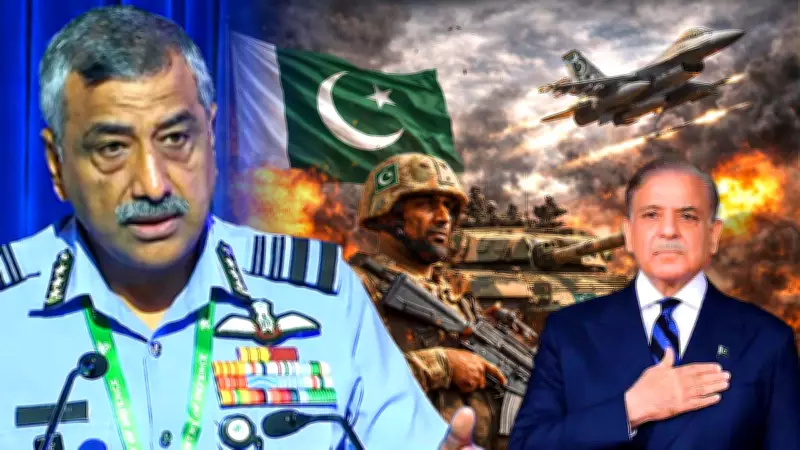
India's Chief of Integrated Defence Staff, Air Marshal Ashutosh Dixit, has delivered a landmark strategic assessment following Operation Sindoor, declaring that India is now confronting a fundamentally different Pakistan than the nation it engaged with over the past three decades. His detailed analysis reveals profound shifts in Pakistan's military structure, nuclear posture, and regional alignment that demand India's immediate strategic attention.
Pakistan's Military Restructuring Reveals Post-Conflict Panic
Air Marshal Dixit presented a compelling narrative of a Pakistan that first hesitated, then panicked, and ultimately restructured its entire military command following Operation Sindoor. "Pakistan could not use its missiles effectively during Operation Sindoor," he stated unequivocally, "either because of the threat of Indian retaliation, or because of civilian control constraints." This admission highlights critical vulnerabilities exposed during the conflict that triggered swift institutional changes.
The consequences emerged rapidly. In August 2025, merely three months after the conflict concluded, Prime Minister Shehbaz Sharif announced the establishment of an entirely new Army Rocket Force Command, directly modeled on China's powerful PLA Rocket Force. This move represented a significant enhancement of Pakistan's missile capabilities and operational structure.

Constitutional Amendment Centralizes Military Power
Then in November 2025, Pakistan's parliament passed its 27th Constitutional Amendment with what Dixit described as "remarkable and troubling haste." This legislation abolished the longstanding position of Chairman Joint Chiefs of Staff, which had existed since 1976, replacing it with a single Chief of Defence Forces position that automatically goes to the serving Army Chief.
This restructuring means one individual now commands Pakistan's Army, Navy, Air Force, and crucially, its nuclear arsenal. Dixit emphasized that "the haste of this restructuring, the centralization it represents, are themselves acknowledgements of the deficiencies exposed during the conflict." The consolidation of authority suggests Pakistan seeks to eliminate coordination problems that hampered its response during Operation Sindoor.
China's Growing Influence Reshapes Regional Dynamics
Air Marshal Dixit warned that Pakistan's transformation represents only one element of a larger strategic puzzle being assembled by China. Beijing now perceives India not as a potential partner but as a structural rival, a shift evidenced by multiple developments.
China has operationally commissioned the advanced Fujian aircraft carrier, strengthened ties with Russia despite international pressure, and expanded partnerships across the Global South. These moves collectively enhance China's ability to project power and influence throughout the region, directly impacting India's strategic environment.
Strategic Optimism Amidst Challenges
Despite these concerning developments, Dixit offered two significant notes of cautious optimism for India's strategic position. First, India's substantial support to Sri Lanka during its severe economic collapse has forged one of New Delhi's closest regional partnerships, demonstrating the effectiveness of India's neighborhood-first approach when implemented with genuine commitment and resources.
Second, Operation Sindoor itself represents what Dixit termed "a strategic inflection point" proving that India has successfully identified and exploited space for effective conventional military operations below the nuclear threshold. This achievement has fundamentally altered India's relationships with its adversaries in ways that will continue unfolding for years to come, establishing new parameters for regional engagement and deterrence.
The comprehensive assessment from India's top integrated defence official underscores that the post-Operation Sindoor landscape requires fresh strategic thinking, enhanced capabilities, and sustained diplomatic engagement as India navigates this transformed security environment.